-
WhatsAPP: +86 18706448138
-
Tengzhou, Shandong, China

Innovative Electrical Solutions for CNC Machines
Innovative Electrical Solutions for CNC Machines

Why Does Tramp Oil Appear in CNC Coolant? Causes, Problems, and the Best Ways to Remove It
f you’ve ever opened a machine coolant tank and noticed a layer of oil floating on the surface, you’re not alone.
Many machine shops experience this issue sooner or later. The coolant begins to smell bad, turns dark, and requires frequent replacement. Operators often assume the coolant itself is poor quality, but in many cases, the real culprit is tramp oil.
Understanding where tramp oil comes from and how to remove it can significantly improve coolant life, reduce maintenance costs, and create a cleaner machining environ
What Is Tramp Oil?
Tramp oil refers to any unwanted oil that enters the coolant system and floats on the surface of the coolant.
Unlike water-based coolant, these oils do not mix with the emulsion. Instead, they gradually accumulate on the surface and form an oily layer.
Because most lubricating oils are less dense than water, this contamination is almost unavoidable in metalworking operations.
Where Does Tramp Oil Come From?
1. Way Lubrication Oil
Linear guides, ball screws, and slideways require continuous lubrication. Excess lubricant eventually drains into the machine’s coolant tank.
In many CNC machines, this is the largest source of tramp oil.
2. Hydraulic System Leakage
Hydraulic cylinders, hoses, fittings, and seals may develop minor leaks over time. Even a small amount of hydraulic oil entering the coolant every day can create a significant layer of floating oil after several weeks.
3. Spindle and Bearing Lubrication
Certain spindle designs and bearing systems may allow lubricating oil to migrate into the cutting area and eventually into the coolant system.
4. Manual Oil Addition and Maintenance
During machine maintenance, operators may accidentally introduce lubricants, grease, or cleaning oils into the coolant tank.
5. Multiple Machines Sharing a Central Coolant System
In centralized coolant systems, contaminants from one machine can spread to the entire system, causing tramp oil to accumulate much faster.
Why Is Tramp Oil a Problem?
Many workshops ignore the floating oil because it doesn’t immediately stop production. However, the long-term consequences can be significant.
1. Accelerated Coolant Degradation
The oil layer blocks oxygen exchange at the coolant surface, creating an environment where anaerobic bacteria can thrive. This often causes coolant to deteriorate much faster.
2. Bad Odors and Bacterial Growth
One of the most common complaints in machine shops is coolant that smells sour or rotten. In many cases, trapped oil is the underlying reason.
3. Shorter Coolant Life
Contaminated coolant loses its stability and lubricating performance, forcing manufacturers to replace coolant more frequently.
4. Increased Maintenance Costs
Frequent coolant replacement means:
- Higher coolant consumption
- More machine downtime
- Additional labor costs
- Increased waste disposal expenses
5. Poorer Workshop Environment
Excess oil can contribute to oil mist generation, slippery floors, and dirty machine interiors.
How to Remove Tramp Oil
There is no single solution suitable for every application. Different methods offer different advantages and limitations.
1. Manual Removal
Some workshops use absorbent pads, scoops, or containers to remove oil manually.
Advantages
- Very low investment
- No equipment required
Disadvantages
- Time-consuming
- Inconsistent results
- Requires operator attention
- Not suitable for continuous production
2. Oil-Absorbing Pads
Oil-absorbing materials can collect floating oil from the coolant surface.
Advantages
- Simple to use
- Low initial cost
Disadvantages
- High consumable cost
- Generates additional waste
- Requires frequent replacement
- Cannot continuously remove oil
3. Disc-Type Oil Skimmers
A rotating disc collects oil from the coolant surface.
Advantages
- Compact design
- Suitable for small tanks
Disadvantages
- Limited oil removal capacity
- Performance depends on oil thickness
- Less effective in some machine layouts
4. Belt Oil Skimmers
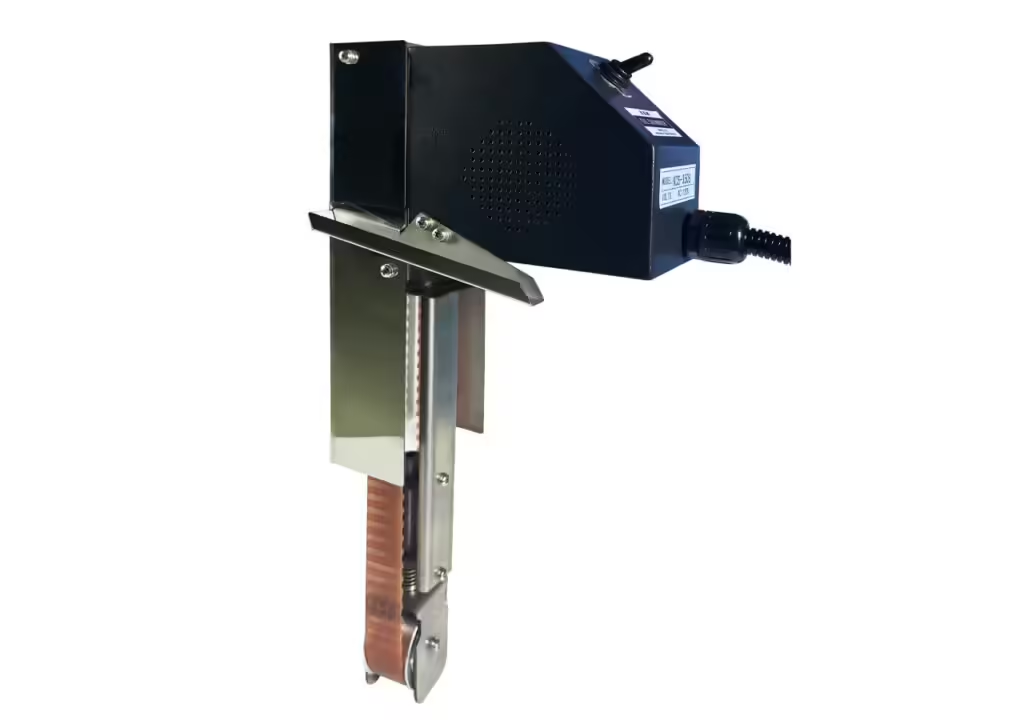
A continuous belt passes through the coolant tank and carries floating oil to a scraper and collection container.
Advantages
- Continuous operation
- Low maintenance
- Suitable for various tank designs
- High reliability
- Cost-effective for long-term use
Disadvantages
- Requires installation space
- Performance depends on proper belt positioning
Why Many Machine Shops Choose Belt Oil Skimmers
For most CNC machining applications, belt oil skimmers provide a practical balance between cost, simplicity, and effectiveness.
By continuously removing floating oil, they help:
- Extend coolant service life
- Reduce unpleasant odors
- Improve coolant cleanliness
- Lower maintenance costs
- Reduce machine downtime
- Improve workshop conditions
Even though tramp oil is almost impossible to eliminate completely, removing it continuously can greatly reduce its impact on production.
Looking for a Simple Way to Keep Your Coolant Cleaner?
Our belt oil skimmer is designed specifically for CNC machine tools and coolant systems, providing continuous tramp oil removal with minimal maintenance requirements.
👉 Click the image below to visit our MIC product page and learn more about our Belt Oil Skimmer solutions