-
WhatsAPP: +86 18706448138
-
Tengzhou, Shandong, China

Innovative Electrical Solutions for CNC Machines
Innovative Electrical Solutions for CNC Machines

What Happens Before a CNC Machine Accessory Goes Into Production?
A CNC machine accessory may look simple.
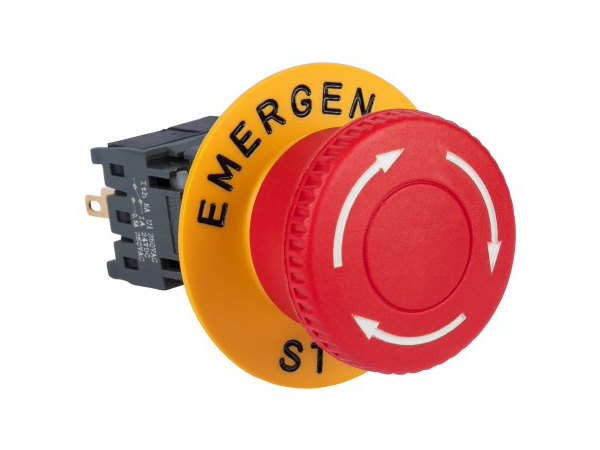
A push button.
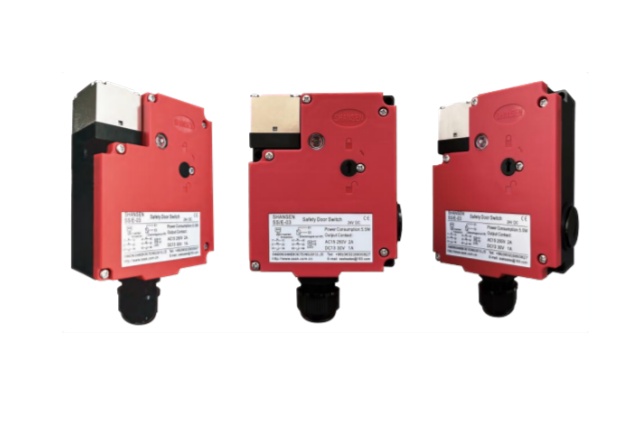
A safety door switch.
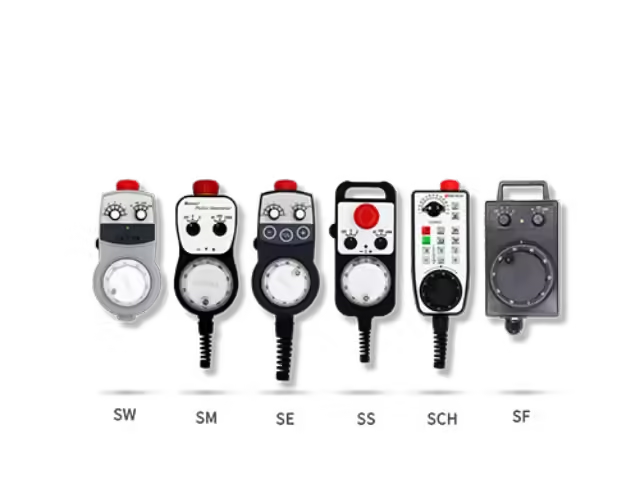
A handheld MPG.
An operator panel.
A relay module or wiring component.
But once these components are installed on a machine, they become part of a working industrial system. They may be exposed to vibration, repeated operation, temperature changes, electrical interference, humidity, mechanical stress and thousands or even millions of operating cycles.
So how do you know whether a product is ready for real production?
It starts with testing.
Reliability Is More Than a Functional Test
The first question during product development is usually simple:
Does it work?
But for industrial equipment, that is only the beginning.
A component can work perfectly during a short functional test and still fail after months of operation.
For example:
- A switch may operate correctly but wear prematurely after repeated cycles.
- An electrical component may work under normal conditions but fail when subjected to abnormal voltage.
- A housing may look robust but lose its mechanical integrity under continuous stress.
- A product may perform normally at room temperature but behave differently under extreme temperatures.
- A connection may pass an initial inspection but become unreliable after long-term mechanical or environmental exposure.
This is why product validation needs to go beyond simply checking whether a device works.
The purpose of testing is to identify potential failure modes before the product reaches the machine.
Different Tests Answer Different Questions
There is no single test that can prove the reliability of an industrial product.
Different tests are designed to answer different engineering questions.
1. Electrical Testing
Electrical components used in CNC machines operate within a system that can contain power supplies, motors, drives, PLCs, relays and other electronic equipment.
Electrical testing therefore focuses on questions such as:
- Can the insulation withstand the required voltage?
- Is the electrical connection stable?
- Does the component operate correctly under its specified voltage range?
- Can the product maintain safe electrical performance over time?
- Does the design meet the relevant EMC requirements?
For products such as operator panels, switches, relays and control components, electrical reliability is particularly important because a small electrical failure can affect the operation of an entire machine.
Our electrical laboratory is equipped for high-voltage testing, with test capability up to 5,000 V for applicable products and test requirements.
The objective is not simply to obtain a test result.
It is to verify that the electrical design has sufficient margin for its intended application.
2. Mechanical Testing
Industrial products are not used in a laboratory environment.
They are installed on machines, operated repeatedly and exposed to mechanical forces during their service life.
Mechanical testing can therefore be used to evaluate:
- Structural strength
- Operating force
- Mechanical endurance
- Component deformation
- Repeated operation
- Mounting and connection reliability
For example, a safety door switch may be operated thousands of times during its service life.
An operator panel button may be pressed repeatedly every working day.
A handheld MPG may be continuously rotated and operated during machine setup.
The question is not only whether the component can survive one operation.
The question is whether it can continue to perform after repeated use.
Our mechanical laboratory has test capability up to 5,000 N for applicable mechanical tests.
3. Environmental Testing
Temperature and humidity can have a significant effect on industrial equipment.
A component designed for a clean indoor environment may behave very differently when installed in a workshop with large temperature fluctuations, high humidity or other environmental conditions.
Environmental testing allows products to be evaluated under controlled conditions rather than relying only on theoretical calculations.
Depending on the product and application, testing may include temperature, humidity and protection-related requirements.
Our environmental laboratory supports controlled temperature conditions from -40°C to 85°C, with humidity control from 10% to 95% RH. Applicable products can also be evaluated against enclosure protection requirements, including IP65-related testing.
The purpose is straightforward:
If a product is expected to work in a demanding environment, its design should be evaluated under demanding conditions.
Testing Should Reflect Real Failure Modes
A useful test is not simply a test that is easy to perform.
It should be connected to how the product will actually be used.
Consider a safety door switch as an example.
Its basic function is simple: detect the position of a machine safety door and provide the corresponding electrical signal.
But real-world reliability involves much more:
Will the mechanism remain stable after repeated operation?
Will the actuator remain correctly engaged?
Can the switch maintain reliable electrical contact?
Can the housing withstand the mechanical forces encountered during installation and operation?
Will environmental conditions affect its performance?
These are different questions, and each may require a different validation method.
The same principle applies to operator panels, MPGs, machine lamps, control components and other CNC accessories.
The test method should follow the application.
Why Test Conditions Matter
A test result is only meaningful when the conditions are controlled and clearly defined.
Temperature, humidity, voltage, mechanical force, operating frequency, test duration and other parameters can all affect the outcome.
This is why laboratory testing is different from simply operating a product on a workbench.
Controlled testing makes it possible to reproduce specific conditions, compare different designs and identify changes in product performance.
It also provides engineering teams with useful information during product development.
If a component fails earlier than expected, the test does not simply indicate that the product is “bad.”
It can help engineers ask better questions:
Where did the failure occur?
Why did it occur?
Was the failure caused by material selection, structure, electrical design, manufacturing variation or another factor?
The answers can then feed back into the next design or production improvement.
From Testing to Production Quality
Testing does not end when a product passes development validation.
There is another important step:
Maintaining consistency during production.
A design may be fully validated, but mass production still requires process control.
This is why quality management needs to cover the entire process, including incoming materials, production, assembly, inspection and sampling.
For products used in CNC machines, consistency is especially important.
A customer does not need one component that performs well in a laboratory.
They need every delivered batch to maintain the expected level of performance.
Testing therefore works together with manufacturing quality control.
Reliability Is Built Before the Product Reaches the Machine
When an operator presses a button on a CNC machine, turns an MPG or opens a safety door, they normally do not think about the testing behind that action.
And that is exactly how it should be.
A reliable industrial component should simply perform its intended function without demanding attention from the operator.
Behind that simple operation may be:
- Electrical verification
- Mechanical testing
- Environmental testing
- Durability testing
- Material and component inspection
- Production process control
- Batch sampling and quality inspection
The final product may be small.
The validation process behind it does not have to be.
At Shandong Shansen CNC Technology Co., Ltd., testing and quality verification are integrated into our product development and manufacturing process for CNC machine tool electrical and automation accessories.
From operator panels and handheld MPGs to safety door switches and other machine tool components, our goal is not simply to make products that work.
It is to understand how they may fail, test those potential failure modes, and continuously improve the product before it becomes part of a customer’s machine.
Reliability starts long before installation.