-
WhatsAPP: +86 18706448138
-
Tengzhou, Shandong, China

Innovative Electrical Solutions for CNC Machines
Innovative Electrical Solutions for CNC Machines

CNC Machine Operation Panel: Types, Functions and Selection Guide
A CNC machine operation panel is one of the main interfaces through which an operator controls and monitors a machine tool.
Also known as a CNC operator panel, CNC control panel, or machine tool operation panel, it typically includes push buttons, selector switches, indicator lamps, emergency stop devices, displays, and other controls required for machine operation.
Although the exact configuration varies from one machine to another, the operation panel plays an important role in machine usability, operator safety, and daily production.
For machine tool manufacturers, retrofit companies, and industrial equipment suppliers, selecting the right CNC operation panel requires consideration of both mechanical and electrical requirements.
What Is a CNC Machine Operation Panel?
A CNC machine operation panel is the physical control interface installed on a CNC machine.
It allows operators to perform functions such as:
- Starting and stopping the machine
- Selecting operating modes
- Controlling spindle functions
- Starting and stopping coolant
- Selecting axes
- Adjusting feed or spindle settings
- Activating auxiliary machine functions
- Resetting alarms
- Performing manual operations
- Activating emergency stop functions
The actual functions depend on the machine design and CNC controller.
A CNC operation panel should therefore be considered part of the complete machine control system rather than simply a collection of buttons and switches.
CNC Operation Panel vs. CNC Control Panel
The terms CNC operation panel, CNC operator panel, and CNC control panel are sometimes used interchangeably.
However, they can describe slightly different configurations depending on the machine manufacturer.
A CNC operation panel generally refers to the operator-facing interface used for daily machine operation.
A CNC control panel can have a broader meaning and may refer to the complete control interface, including the display, keyboard, operation switches, and other control components.
For machine tool applications, the exact terminology is less important than confirming the actual mechanical and electrical configuration required.
What Components Are Included in a CNC Operation Panel?
A machine operation panel can contain many different components.
Common examples include:
Push Buttons
Push buttons can be used for functions such as:
- Cycle start
- Feed hold
- Reset
- Coolant
- Lubrication
- Machine functions
Selector Switches
Selector switches allow the operator to select different machine modes or functions.
Examples include:
- Manual / automatic mode
- Axis selection
- Spindle control
- Feed override
- Function selection
Emergency Stop Button
An emergency stop button provides a clearly identifiable means of initiating the machine’s emergency stop function.
Its electrical configuration should be integrated into the machine’s overall safety circuit.
Indicator Lamps
Indicator lamps provide visual information about machine status.
Depending on the machine, they may indicate:
- Power
- Machine operation
- Alarm
- Standby
- Coolant
- Lubrication
- Other auxiliary functions
Displays and Keypads
Some CNC operator panels integrate displays or keypads, while others are designed to work alongside a separate CNC display unit.
The configuration depends on the controller and machine architecture.
Types of CNC Machine Operation Panels
There is no single standard design for all CNC machines.
Different applications require different panel structures.
Lathe Operation Panels
A CNC lathe operation panel is designed around turning applications.
Depending on the machine, it may include controls for:
- Spindle
- Chuck
- Tailstock
- Coolant
- Turret
- Feed
- Machine modes
The panel layout may also be adapted to the physical structure of the lathe.
Machining Center Operation Panels
A machining center generally requires controls related to:
- Multiple axes
- Spindle
- Tool change
- Coolant
- Workpiece setup
- Automatic cycles
The panel may therefore contain a different switch arrangement from a lathe.
Pendant Operation Panels
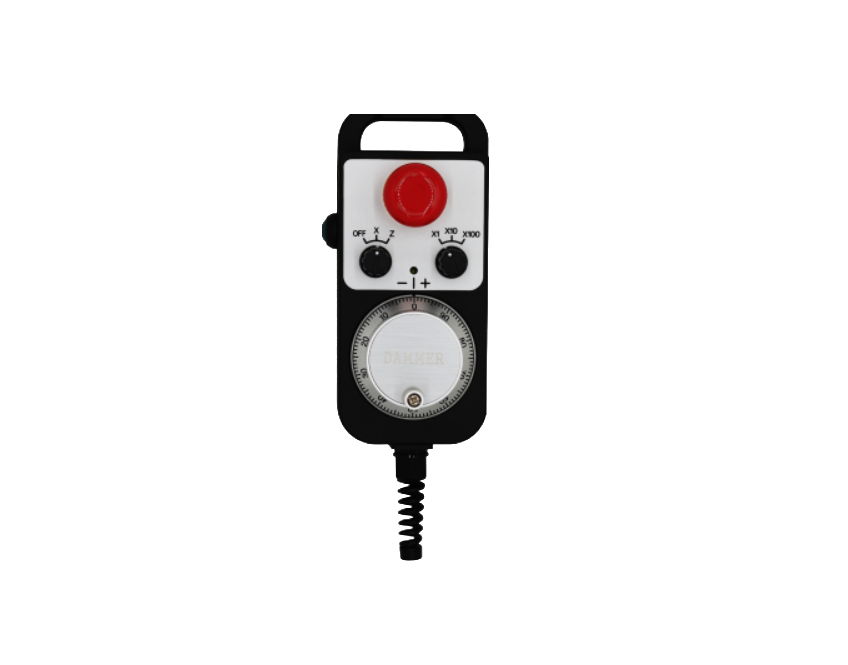
A CNC pendant panel is designed so that the operator can position the control interface in a convenient location.
Pendant-style panels can be useful where the machine structure makes a fixed control cabinet inconvenient.
The pendant may contain:
- Operation switches
- Emergency stop
- MPG handwheel
- Display
- Keypad
- Indicator lights
Custom OEM Operation Panels
Machine manufacturers may require a completely customized panel.
The panel can be developed around the customer’s:
- Machine structure
- Control system
- Electrical diagram
- Operator workflow
- Branding
- Dimensions
- Switch arrangement
This is common in OEM machine production.
How to Choose a CNC Operation Panel
Choosing a CNC operation panel involves more than selecting the number of buttons.
The following factors should be considered.
1. CNC Controller Compatibility
The first step is to identify the CNC controller used on the machine.
Different control systems can have different electrical interfaces, switch configurations, signal requirements, and panel layouts.
The operation panel should therefore be designed around the actual machine control architecture.
2. Panel Dimensions
Physical dimensions are especially important for replacement and retrofit applications.
Before selecting a panel, confirm:
- Overall dimensions
- Mounting holes
- Panel cutout
- Installation depth
- Cable outlet
- Connector position
Even a panel with the correct functions may not be suitable if it cannot be installed in the existing machine structure.
3. Switch Configuration
The number and type of switches should match the machine functions.
For example, a machine may require:
- Push buttons
- Selector switches
- Rotary switches
- Key switches
- Indicator lamps
- Emergency stop
- Override controls
The exact configuration should be determined from the machine’s electrical design.
4. Emergency Stop Configuration
Emergency stop is an important part of the machine’s safety system.
The emergency stop device installed on the operation panel must be compatible with the machine’s safety circuit.
For OEM projects, the emergency stop configuration should be confirmed during the electrical design stage rather than after the panel has already been manufactured.
5. Label and Language Requirements
Machine manufacturers supplying equipment to different markets may require different languages.
Panel labels can be customized for applications in:
- Europe
- North America
- Japan
- Southeast Asia
- India
- South America
- Other international markets
English labeling is commonly used for international equipment, while local-language labels may be required for specific markets.
6. Connector and Cable Requirements
The panel’s electrical interface should match the machine’s wiring system.
Important details include:
- Connector type
- Pin assignment
- Number of wires
- Cable length
- Cable direction
- Terminal configuration
For OEM projects, the complete cable assembly can be produced together with the panel.
This can reduce wiring work during machine assembly.
7. Environmental Conditions
Machine operation panels are used in industrial environments.
They may be exposed to:
- Cutting oil
- Coolant
- Metal chips
- Dust
- Vibration
- Frequent operator use
Therefore, the panel construction and component selection should be appropriate for the actual machine environment.
Protection against liquid and dust may also be important depending on the installation location.
Membrane Panel vs. Hard Operation Panel
One common design consideration is the type of operator interface.
Membrane Operation Panel
A membrane panel uses a printed flexible interface with integrated switches or keys.
Potential advantages include:
- Compact construction
- Flexible graphic design
- Easy labeling
- Customized appearance
- Suitable for integrated panel designs
Hard Panel
A hard operation panel uses physical switches, buttons, selector knobs, and other individual components.
Potential advantages include:
- Tactile operation
- Easy identification of individual controls
- Straightforward replacement of individual components
- Flexible switch configurations
The appropriate design depends on the machine application and operator requirements.
CNC Operation Panel for Retrofit Applications
CNC retrofit projects often require replacement of an existing operation panel.
In this situation, the original panel should be examined carefully before selecting a replacement.
Useful information includes:
- Original model number
- Photographs
- Panel dimensions
- Wiring diagram
- Connector information
- Switch layout
- CNC controller model
- Machine model
A replacement panel does not necessarily need to be visually identical to the original.
However, the mechanical installation, electrical interface, and required machine functions must be compatible.
CNC Operation Panel for OEM Machine Builders
OEM machine builders have different requirements from replacement customers.
Instead of simply replacing an existing panel, an OEM customer may need a new panel designed specifically for a machine.
A typical development process may include:
Machine Requirements → Panel Layout → Electrical Configuration → Sample → Testing → Approval → Mass Production
During this process, the supplier may work with the machine manufacturer’s engineering team to confirm:
- Panel dimensions
- Button arrangement
- Switch specifications
- Electrical connections
- Connector locations
- Cable length
- Labels
- Logo
- Packaging
This approach allows the operation panel to become part of the machine’s overall design rather than an off-the-shelf component added afterward.
Can CNC Operation Panels Be Customized?
Yes.
For OEM applications, customization can include both appearance and technical configuration.
Common options include:
- Panel dimensions
- Mounting holes
- Switch layout
- Button type
- Selector switches
- Emergency stop
- Indicator lamps
- Connector
- Cable
- Label
- Language
- Logo
- Surface finish
- Housing design
Customers can provide an existing sample, drawing, photograph, electrical diagram, or product specification as the starting point.
CNC Operation Panel and MPG Handwheel Integration
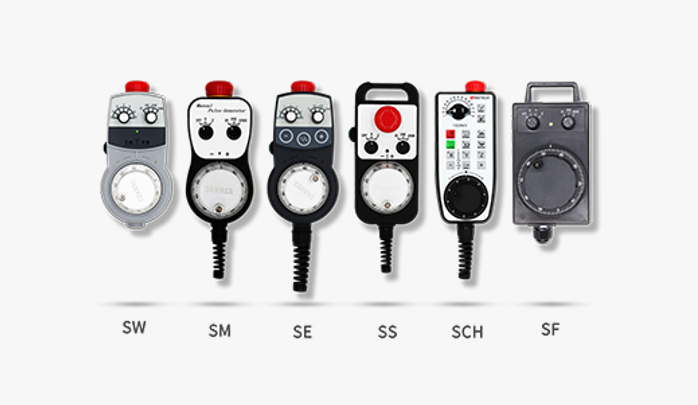
An MPG handwheel is often used together with a CNC operation panel.
The operation panel provides the main machine control interface, while the MPG handwheel provides convenient manual incremental axis movement.
A combined operator station may therefore include:
CNC Operation Panel + MPG Handwheel + Emergency Stop + Machine Status Indicators
This configuration can be particularly useful during machine setup and manual positioning.
The electrical interface between the MPG and CNC control system should be confirmed during the design stage.
Why Work With a CNC Operation Panel Manufacturer?
For standard replacement applications, an off-the-shelf panel may be sufficient.
For OEM projects, however, direct communication with the manufacturer can provide several advantages.
The manufacturer can discuss:
- Panel design
- Electrical configuration
- Switch selection
- Mechanical dimensions
- Cable assembly
- Labeling
- Samples
- Production quantities
- Quality requirements
This can be particularly useful when the machine manufacturer requires several customized components rather than a single standard panel.
CNC Operation Panel Manufacturer for OEM and ODM Projects
Shansen CNC manufactures CNC machine operation panels, CNC operator panels, and customized machine tool control interfaces for industrial applications.
Our capabilities cover different panel structures and configurations, including customized switch arrangements, dimensions, labels, connectors, cables, and other OEM requirements.
The panels can be developed for different CNC machine applications and controller configurations.
Shansen CNC also manufactures other machine tool accessories, including:
- CNC MPG handwheels
- Manual Pulse Generators
- Safety door switches
- LED machine tool work lights
- Warning lights
- Cable assemblies
- Relay modules
- Intelligent switchboards
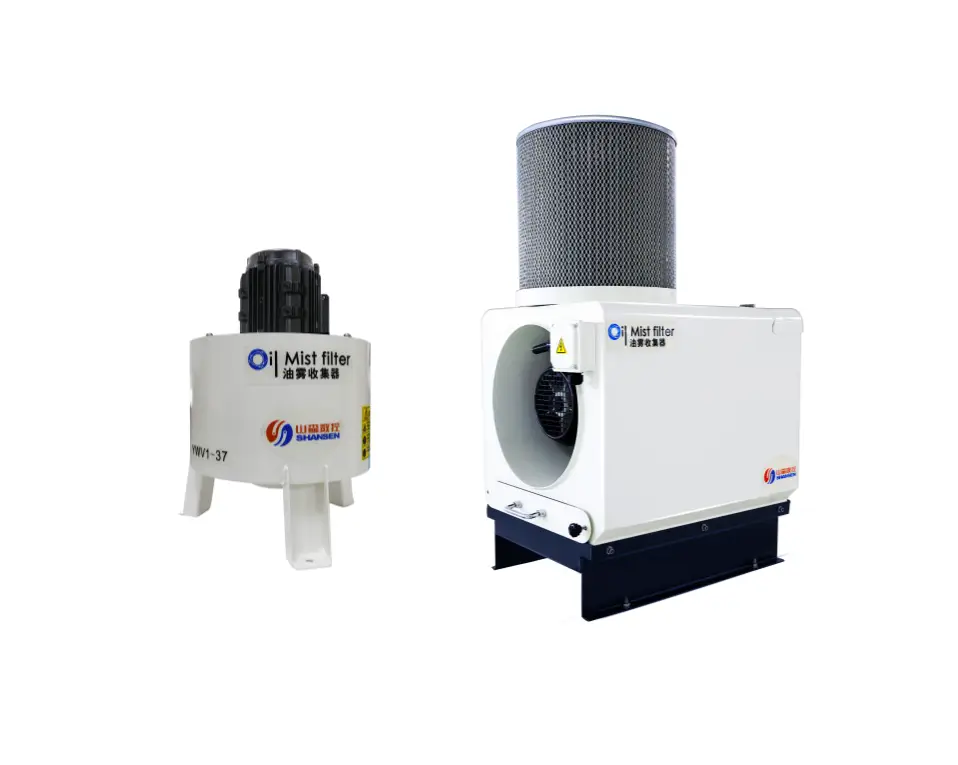
- Oil mist collectors
- Oil skimmers
This allows customers to source multiple machine tool electrical and functional components from one manufacturing partner.
Frequently Asked Questions About CNC Operation Panels
What is a CNC machine operation panel?
A CNC machine operation panel is the operator interface used to control and monitor various functions of a CNC machine tool.
What is the difference between a CNC operation panel and a CNC control panel?
The terms are often used interchangeably. A CNC operation panel generally refers to the operator-facing controls, while CNC control panel can have a broader meaning depending on the machine design.
Can a CNC operation panel be customized?
Yes. Dimensions, switches, buttons, emergency stop devices, connectors, cables, labels, logos, and other features can be customized for OEM applications.
Can an operation panel be used for CNC retrofit projects?
Yes, provided that its mechanical dimensions, electrical connections, control functions, and safety-related configuration are compatible with the machine.
Can a CNC MPG be integrated into an operation panel?
Yes. An MPG handwheel can be integrated into or installed alongside a CNC machine operation panel, depending on the machine design.
What information is needed for a customized CNC operation panel?
Useful information includes the machine model, CNC controller, panel dimensions, mounting requirements, electrical diagram, switch configuration, photographs, drawings, and cable or connector requirements.
Conclusion
A CNC machine operation panel is an important part of the operator interface of a machine tool.
The correct panel needs to satisfy both mechanical and electrical requirements while providing practical and reliable control for the operator.
For standard applications, an existing panel may be sufficient. For replacement, retrofit, and OEM projects, however, customization may be required to match the machine structure, control system, wiring, and operator requirements.
When selecting a CNC operation panel manufacturer, consider not only the panel itself but also the supplier’s ability to provide customization, cable assemblies, electrical components, samples, and long-term OEM production.
Shansen CNC provides CNC operation panels and machine tool accessories for OEM, ODM, replacement, and industrial equipment applications.