-
WhatsAPP: +86 18706448138
-
Tengzhou, Shandong, China

Innovative Electrical Solutions for CNC Machines
Innovative Electrical Solutions for CNC Machines

CNC Machine Safety: Safety Door Switches, Interlocks and Essential Safety Components
Safety is an important consideration in the design and operation of CNC machine tools.
CNC lathes, machining centers, milling machines, grinding machines, and other automated equipment contain moving components, rotating tools, workpieces, and other potential hazards. Machine guards, safety doors, emergency stop devices, and electrical safety circuits are therefore commonly incorporated into the machine design.
Among these components, the CNC safety door switch is an important part of many machine guarding systems.
This article explains the function of safety door switches, machine door interlocks, emergency stop devices, and other related CNC machine safety components, as well as the factors that machine builders should consider when selecting them.
What Is a CNC Safety Door Switch?
A CNC safety door switch is a device used to monitor the position or status of a machine safety door or guard.
The switch is installed on the machine door and its corresponding frame or actuator mechanism. Depending on the design, the switch can provide an electrical signal to the machine’s safety circuit when the door is opened or closed.
A typical application is:
Safety Door Closed → Safety Circuit Permitted → Machine Operation
Safety Door Open → Safety Circuit Changes State → Machine Operation Restricted
The exact behavior depends on the machine’s safety architecture and control system.
A safety door switch should therefore be considered as one component of the complete machine safety system rather than as an independent safety solution.
What Is a CNC Door Interlock?
A CNC door interlock is a mechanism designed to prevent or restrict hazardous machine operation when a safety door or guard is not in the required position.
The terms door interlock, safety interlock, and safety door switch are sometimes used differently depending on the manufacturer and application.
A basic interlock arrangement may monitor whether the machine door is closed before allowing certain operations.
More advanced systems may also involve guard locking, safety relays, safety controllers, or other components.
For this reason, the appropriate safety architecture should be determined according to the machine’s risk assessment and applicable requirements.
Why Are Safety Door Switches Used on CNC Machines?
During machining, the spindle, cutting tool, chuck, workpiece, table, or other moving components can operate at high speed.
A physical enclosure provides a barrier between these moving components and the operator.
The safety door switch provides an electrical interface between the physical guard and the machine’s control or safety circuit.
This can help the machine determine whether the guard is in the required position before permitting certain operations.
Common applications include:
- CNC lathes
- CNC machining centers
- Milling machines
- Grinding machines
- Turning centers
- Automatic production machines
- Special-purpose machine tools
- Industrial automation equipment
How Does a Safety Door Switch Work?
The basic operating principle is straightforward.
A switch or sensing device detects the position of the machine door.
When the door is in the required position, the switch provides the corresponding electrical state to the machine safety circuit.
When the door changes position, the electrical state changes.
The machine’s safety system can then respond according to its designed logic.
A simplified example is:
Door Closed
→ Safety switch in permitted state
→ Safety circuit receives the expected signal
→ Machine can operate when other safety conditions are satisfied
Door Open
→ Safety switch changes state
→ Safety circuit detects the changed condition
→ The relevant hazardous operation is stopped or prevented according to the machine’s safety design
The actual circuit should always be designed and validated as part of the complete machine safety system.
Safety Door Switch vs. Ordinary Limit Switch
A standard limit switch and a safety door switch may look similar, but they should not automatically be treated as equivalent products.
A conventional limit switch is often used to detect the position of a mechanical component.
A safety-related door switch is intended for integration into a machine guarding or safety function and may have different mechanical and electrical characteristics.
The appropriate device depends on the required safety function, circuit architecture, and applicable standards.
For machine builders, simply replacing a safety-related component with an ordinary position switch based on similar dimensions may not provide an equivalent safety function.
Mechanical Design of a CNC Safety Door Switch
A safety door switch normally includes a switch body and some form of actuator or sensing mechanism.
Depending on the design, the actuator may be:
- Mechanical actuator
- Tongue actuator
- Roller or lever mechanism
- Magnetic actuator
- Coded actuator
- Other dedicated sensing mechanism
The appropriate type depends on the machine door structure and required detection method.
The switch should be mounted so that normal door movement does not cause unnecessary mechanical stress or damage.
Electrical Specifications to Check
Before selecting a CNC safety door switch, machine builders should confirm the electrical requirements.
Important parameters may include:
- Number of contacts
- Contact configuration
- Rated voltage
- Rated current
- Normally open or normally closed contacts
- Connector
- Cable
- Terminal configuration
- Switching characteristics
For safety-related applications, the contact configuration must be compatible with the machine’s safety circuit.
The switch should not be selected solely according to its physical appearance.
Mechanical Specifications to Check
The mechanical interface is equally important.
Before ordering, check:
- Overall dimensions
- Mounting hole positions
- Actuator type
- Actuator direction
- Door opening direction
- Installation clearance
- Mounting orientation
- Cable outlet position
A switch that meets the electrical requirements but cannot be properly installed on the machine is not a practical solution.
Machine Door Interlock Applications
CNC machine doors can have different mechanical structures.
For example:
- Sliding doors
- Hinged doors
- Vertical doors
- Automatic doors
- Multi-panel enclosures
The safety switch or interlock mechanism should be selected according to the actual door structure.
For automatic doors, the safety system may also need to coordinate with the door actuator and machine controller.
The complete system should be designed so that the machine cannot enter an unsafe operating condition because of an incorrectly positioned or incompletely closed guard.
Emergency Stop and Safety Door Switches
A CNC emergency stop button and a safety door switch serve different functions.
An emergency stop device allows the operator or another person to initiate an emergency stop when a hazardous situation occurs.
A safety door switch monitors the condition of a guard or door.
A CNC machine may use both:
Emergency Stop → Manual emergency intervention
Safety Door Switch → Guard status monitoring
Both may be integrated into the machine’s safety circuit, but they should not be treated as interchangeable devices.
Safety Relay and Safety Controller
A safety door switch normally does not operate in isolation.
Depending on the machine architecture, the signal may be processed through:
- Safety relay
- Safety controller
- Safety PLC
- CNC control system
- Other safety-related control components
The complete circuit determines how the machine responds when the safety door is opened.
For example, opening a door may result in the machine stopping spindle rotation, disabling certain motion functions, or preventing a new cycle from starting.
The specific response depends on the machine design and its safety requirements.
What Should Machine Builders Consider When Selecting a Safety Door Switch?
Several factors should be evaluated together.
1. Machine Type
Determine whether the switch will be installed on:
- CNC lathe
- Machining center
- Milling machine
- Grinding machine
- Special-purpose equipment
2. Door Structure
Confirm whether the machine uses a sliding, hinged, vertical, or automatic door.
3. Electrical Circuit
Check the required contact arrangement, voltage, current, connector, and wiring.
4. Installation Space
Confirm dimensions and mounting holes before ordering.
5. Operating Environment
Machine tool components can be exposed to:
- Coolant
- Cutting oil
- Metal chips
- Dust
- Vibration
- Temperature changes
The switch should therefore be suitable for the actual installation environment.
6. Required Safety Function
The required safety function should be defined before selecting the component.
A machine builder should consider the complete safety architecture rather than selecting a switch only by model number or appearance.
Safety Door Switches for CNC Retrofit Projects
Retrofit projects often involve replacing an existing safety component.
In this situation, the following information can help identify a suitable replacement:
- Existing switch model
- Product photographs
- Machine model
- Door structure
- Dimensions
- Mounting hole positions
- Connector
- Cable length
- Contact configuration
- Electrical specifications
A replacement switch should be evaluated based on its actual application and required safety function.
If the original switch is no longer available, a technically compatible alternative may require additional engineering verification.
Safety Door Switches for OEM Machine Builders
For OEM machine manufacturers, the requirements may be different.
Instead of replacing an existing switch, the machine builder may select the safety switch during the initial machine design stage.
This allows the supplier and machine builder to confirm:
- Switch dimensions
- Mounting method
- Door structure
- Actuator
- Contact configuration
- Connector
- Cable
- Labeling
- Production quantity
For large-volume production, standardizing the safety door switch across several machine models may also simplify procurement and maintenance.
Safety Components as Part of a Complete CNC Machine
A CNC safety system usually consists of multiple components rather than one device.
Depending on the machine, these may include:
- Safety door switches
- Door interlocks
- Emergency stop buttons
- Safety relays
- Safety controllers
- Limit switches
- Guarding
- Warning lights
- Control circuits
The components must work together according to the machine’s safety design.
For this reason, machine builders should consider both individual component specifications and the complete system architecture.
CNC Safety Door Switch Manufacturer
Shansen CNC manufactures safety door switches and machine tool electrical components for CNC machines and industrial equipment.
Our product range includes safety-related switches as well as:
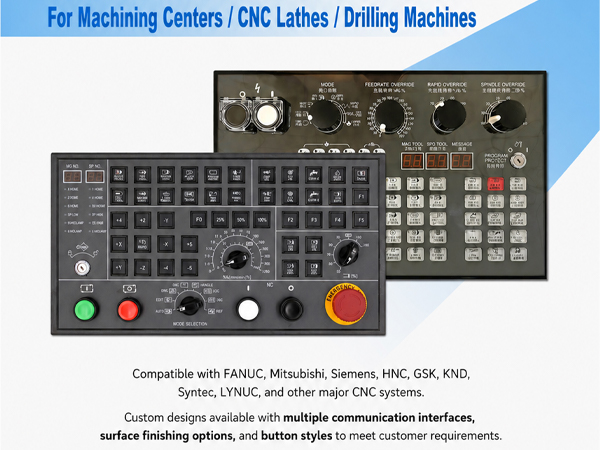
- CNC machine operation panels
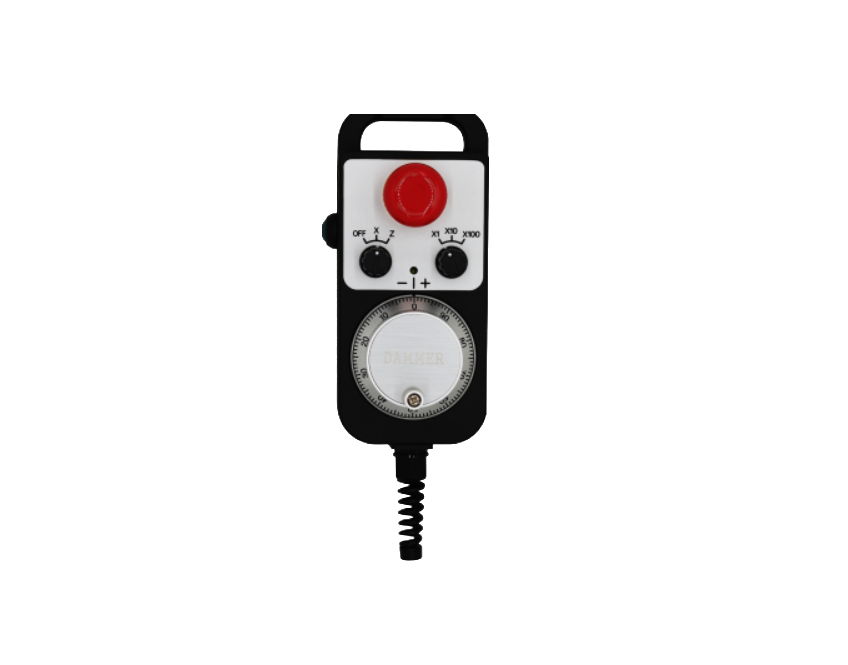
- MPG handwheels
- Manual Pulse Generators
- LED machine tool work lights
- Warning lights
- Cable assemblies
- Relay modules
- Intelligent switchboards
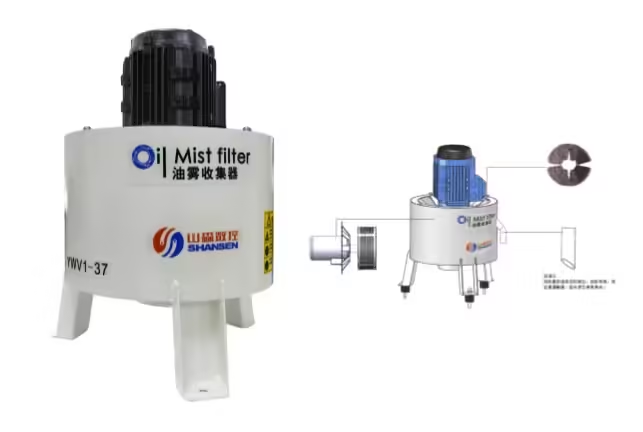
- Oil mist collectors
- Oil skimmers
For OEM applications, product configurations such as cables, connectors, dimensions, and other requirements can be discussed according to the customer’s machine design.
This allows machine tool manufacturers to source safety-related components together with other electrical and functional machine accessories.
Frequently Asked Questions About CNC Safety Door Switches
What is a CNC safety door switch?
A CNC safety door switch monitors the position or status of a machine safety door and provides a corresponding signal to the machine’s control or safety circuit.
What is a CNC door interlock?
A CNC door interlock is a mechanism or system designed to restrict or prevent certain machine operations when a safety door or guard is not in the required condition.
Is a safety door switch the same as a limit switch?
Not necessarily. A limit switch is generally used for position detection, while a safety door switch is intended for integration into a machine guarding or safety function. The appropriate device depends on the application and safety design.
Can a safety door switch be customized?
Depending on the manufacturer, configurations such as cable length, connector, mounting arrangement, and other product requirements may be customized for OEM applications.
Can a safety door switch be used for a CNC retrofit?
Yes, but the replacement should be evaluated for mechanical compatibility, electrical compatibility, and the required safety function.
Does a safety door switch replace an emergency stop?
No. A safety door switch monitors a guard or door, while an emergency stop device provides a means of initiating an emergency stop. They perform different functions.
Conclusion
A CNC safety door switch is an important component in many machine guarding systems.
When selecting a safety switch or CNC door interlock, machine builders should consider the machine structure, door design, electrical circuit, installation dimensions, operating environment, and required safety function.
For OEM projects, these requirements should ideally be considered during the machine design stage.
For replacement and retrofit applications, the original component’s electrical and mechanical specifications should be verified before selecting an alternative.
A well-designed CNC machine safety system depends on the interaction of multiple components, including guards, safety door switches, emergency stop devices, safety control components, and machine control systems.
Shansen CNC supplies CNC safety door switches and a broad range of machine tool electrical accessories for OEM, ODM, replacement, and industrial equipment applications.