-
WhatsAPP: +86 18706448138
-
Tengzhou, Shandong, China

Innovative Electrical Solutions for CNC Machines
Innovative Electrical Solutions for CNC Machines

CNC Oil Skimmer: How Tramp Oil Removal Improves Coolant Management
In CNC machining, coolant and cutting fluids play an important role in cooling the cutting area, reducing friction, and carrying machining debris away from the workpiece. However, coolant performance can gradually deteriorate when unwanted oil accumulates on the surface of the coolant tank.
A CNC oil skimmer is a simple and effective solution for removing tramp oil from machining coolant. By continuously separating floating oil from water-based cutting fluids, an oil skimmer can help maintain coolant quality and reduce the need for frequent coolant replacement.
This article explains how CNC oil skimmers work, where they are used, and what to consider when selecting an oil skimmer for a CNC machine tool.
What Is a CNC Oil Skimmer?
A CNC oil skimmer is a device designed to remove tramp oil, also called floating oil, from the surface of a coolant tank.
During machining, different types of oil may enter the coolant system. These can include:
- Hydraulic oil
- Lubricating oil
- Gear oil
- Slideway oil
- Other machine oils
These oils are different from the water-based coolant used for cutting and may accumulate on the coolant surface.
A CNC oil skimmer uses an oil-attracting or oil-collecting element to pick up the floating oil. The collected oil is then separated from the coolant and discharged into a separate container.
For this reason, CNC oil skimmers are also commonly described as:
- Tramp oil skimmers
- Coolant oil skimmers
- CNC coolant skimmers
- Machine tool oil skimmers
- Cutting fluid oil skimmers
- Coolant tank oil skimmers
Why Does Tramp Oil Need to Be Removed?
Tramp oil is not part of the intended coolant formulation. When it accumulates in a coolant tank, it can interfere with coolant management and maintenance.
An excessive amount of floating oil may contribute to:
Reduced Coolant Quality
Unwanted oil can change the condition of the coolant and make it more difficult to maintain the intended coolant concentration and condition.
Surface Oil Accumulation
When tramp oil continuously enters the coolant tank, a visible oil layer can develop on the surface. Removing this layer helps keep the coolant system cleaner.
More Frequent Coolant Maintenance
If tramp oil is not removed, operators may need to clean the coolant tank and replace the coolant more frequently.
Unpleasant Working Conditions
Accumulated oil and degraded coolant can contribute to unpleasant odors and a less clean working environment.
For CNC machine shops, regular tramp oil removal is therefore an important part of coolant maintenance.
How Does a CNC Oil Skimmer Work?
The basic operating principle of an oil skimmer is relatively simple.
A typical system consists of:
- Oil-collecting element
- Drive mechanism
- Oil separation or scraping mechanism
- Discharge outlet
- Motor and electrical components
The collecting element enters the coolant tank and comes into contact with the floating oil. Because the collecting surface preferentially attracts oil, the oil adheres to it as the element moves through the coolant.
As the collecting element returns upward, the collected oil is removed by a scraper or separation mechanism. The separated oil then flows into a collection container.
The coolant remains in the tank while the unwanted floating oil is continuously removed.
Common Types of CNC Oil Skimmers
Different oil skimmer designs use different methods to collect tramp oil.
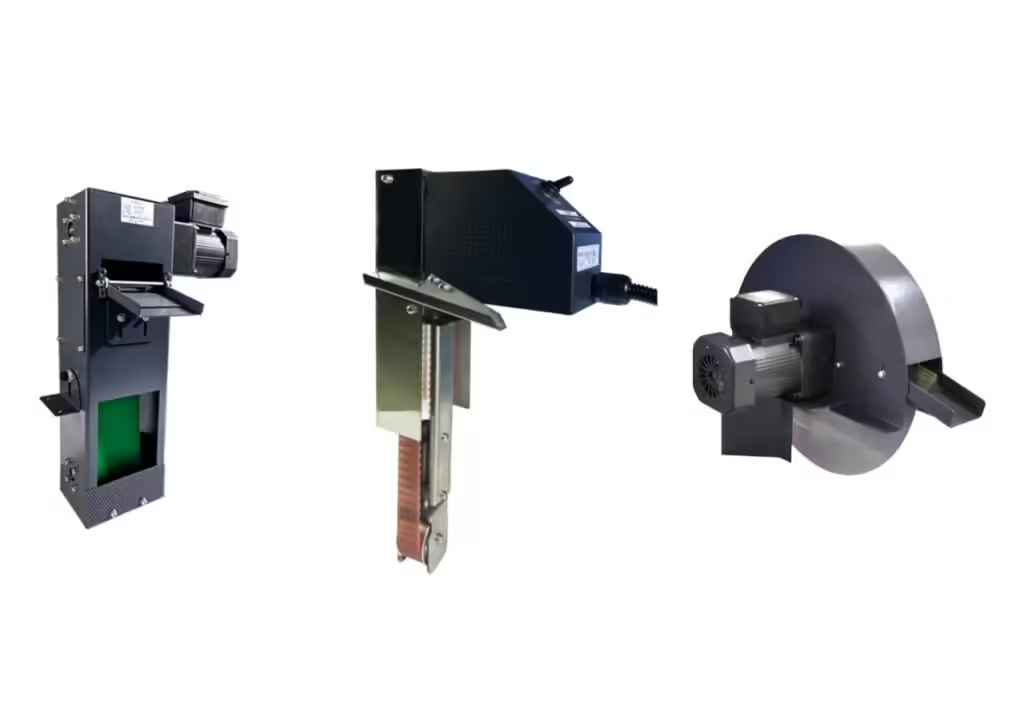
Belt Oil Skimmer
A belt-type oil skimmer uses a continuous belt that passes through the coolant.
The belt picks up floating oil and carries it upward, where the oil is removed and discharged.
Belt skimmers are widely used because of their relatively simple construction and continuous operation.
Disc Oil Skimmer
A disc oil skimmer uses a rotating disc partially immersed in the coolant.
Oil adheres to the disc surface as it rotates through the liquid. A scraper then removes the collected oil from the disc.
Disc-type designs can provide a compact solution for coolant tanks with suitable installation space.
Tube or Rope Oil Skimmer
Some oil skimmers use an oil-attracting rope or tube that moves through the coolant.
This design can be useful for specific tank configurations, although the selection of the collecting material is important for reliable oil separation.
The appropriate design depends on the coolant tank structure, oil contamination level, installation space, and required oil removal capacity.
Where Is a CNC Oil Skimmer Installed?
A CNC oil skimmer is generally installed on or beside the coolant tank.
Typical applications include:
- CNC turning machines
- CNC machining centers
- Grinding machines
- Metalworking coolant systems
- Central coolant systems
- Industrial coolant tanks
- Parts washing systems
- Other water-based fluid systems
For individual CNC machines, a compact oil skimmer can be installed directly on the coolant tank.
For larger systems, the skimmer may be integrated into a centralized coolant management system.
CNC Oil Skimmer vs. CNC Oil Mist Collector
Although both products are related to oil management, they solve different problems.
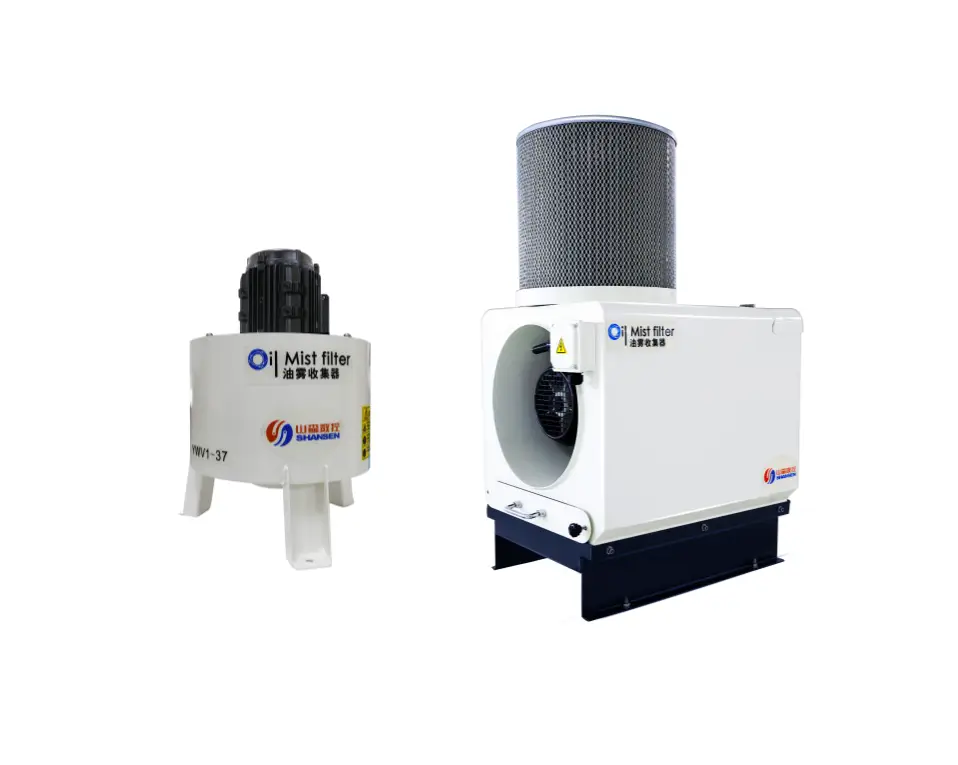
A CNC oil mist collector removes airborne oil mist generated during machining.
A CNC oil skimmer removes floating oil from liquid coolant.
The difference can be summarized as follows:
| Equipment | Main Target | Typical Location |
|---|---|---|
| CNC Oil Mist Collector | Airborne oil mist | Machine enclosure / exhaust system |
| CNC Oil Skimmer | Floating tramp oil | Coolant tank |
| Coolant Filtration System | Solid particles and contaminants | Coolant circulation system |
In some machining environments, these systems can be used together as part of a broader machine-tool fluid and air management strategy.
How to Choose a CNC Oil Skimmer
Before selecting an oil skimmer, several technical factors should be considered.
1. Coolant Tank Design
The shape and dimensions of the coolant tank directly affect installation.
Check:
- Tank depth
- Tank opening
- Available mounting space
- Coolant level
- Accessibility for maintenance
The collecting element must be able to reach the area where floating oil accumulates.
2. Oil Removal Capacity
Different machining applications generate different amounts of tramp oil.
For applications with significant oil contamination, a higher-capacity oil skimmer or longer operating time may be required.
The required capacity should be considered together with the coolant tank volume and the rate at which tramp oil enters the system.
3. Collecting Method
Belt, disc, tube, and other collection methods have different installation and maintenance requirements.
The best choice depends on the actual coolant system rather than simply selecting the largest available model.
4. Continuous or Intermittent Operation
Some applications require continuous oil removal, while others only need periodic operation.
A timer or control function can be useful when the skimmer needs to operate according to a predefined schedule.
For applications requiring automatic operation, check whether the selected model supports the required control function.
5. Power Supply
The motor and electrical configuration should match the machine shop’s power supply.
Common specifications include:
- AC voltage
- Frequency
- Motor power
- Rotation speed
For export projects, the required voltage and frequency should be confirmed before production.
6. Maintenance Requirements
A good oil skimmer should be straightforward to inspect and maintain.
Important maintenance points may include:
- Collecting belt or disc
- Scraper
- Drive components
- Motor
- Discharge pipe
- Mounting components
Easy access to these components can reduce maintenance time.
Can an Oil Skimmer Remove All Contamination from Coolant?
No.
An oil skimmer is primarily designed to remove floating oil, particularly tramp oil that separates from water-based coolant and rises to the surface.
It is not a replacement for every type of coolant filtration or treatment system.
For example:
- Floating oil → oil skimmer
- Metal chips → chip conveyor or solid-particle filtration
- Fine particles → coolant filtration system
- Airborne oil mist → oil mist collector
Selecting equipment according to the type of contamination is therefore important.
CNC Oil Skimmer for Machine Tool Manufacturers and OEM Projects
For CNC machine builders and industrial equipment manufacturers, the oil skimmer may need to be adapted to the machine’s coolant system rather than used as a standalone standard product.
OEM requirements may include:
- Customized mounting brackets
- Different collecting element dimensions
- Specific motor voltage
- Customized cable length
- Machine-specific installation dimensions
- Private labeling
- Customized packaging
- Integration with machine control systems
For these projects, it is useful to provide the machine manufacturer with the coolant tank dimensions and installation requirements at the beginning of the project.
A manufacturer with in-house mechanical, electrical, machining, and assembly capabilities can also make customization easier when the oil skimmer needs to be adapted to a particular machine design.
Conclusion
A CNC oil skimmer is a relatively simple but useful component for coolant management. By removing floating tramp oil from water-based cutting fluids, it can help keep coolant systems cleaner and reduce the accumulation of unwanted oil in machining environments.
When selecting an oil skimmer, consider the coolant tank design, oil contamination level, collecting method, operating mode, power supply, and maintenance requirements rather than focusing only on the nominal capacity.
For CNC machine manufacturers, distributors, and system integrators, these factors are especially important when selecting an oil skimmer for OEM applications or integrating it into a new machine design.
If you are also looking for solutions for airborne oil mist generated during machining, see our guide to CNC Oil Mist Collectors and learn how oil mist filtration differs from tramp oil removal.