-
WhatsAPP: +86 18706448138
-
Tengzhou, Shandong, China

Innovative Electrical Solutions for CNC Machines
Innovative Electrical Solutions for CNC Machines

Disc Oil Skimmers in Coolant Systems: What We Observed During Testing
Managing tramp oil is a common challenge in metalworking and machining operations. Over time, lubricating oils from machine components can accumulate on the surface of coolant tanks, affecting coolant quality, increasing maintenance requirements, and creating an unpleasant working environment.
Various oil removal methods are available today, with belt-type oil skimmers being one of the most widely used solutions. Recently, we have also been evaluating disc-type oil skimmers and their potential advantages in certain applications.
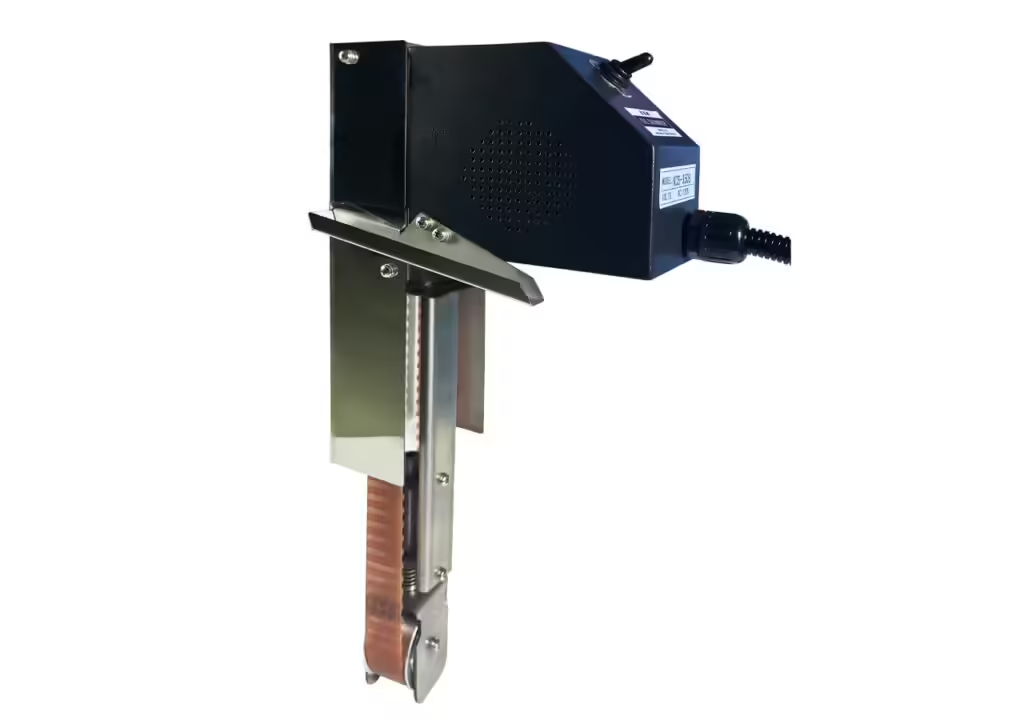
As part of this process, we conducted a laboratory test using our newly developed YSF3-25150 Disc Oil Skimmer. We would like to share several observations from that test.
Understanding Tramp Oil in Coolant Systems
Tramp oil typically enters coolant systems through way lubricants, hydraulic oil leaks, spindle lubrication systems, or other machine components. Since these oils are generally lighter than water-based coolants, they accumulate on the liquid surface.
If not removed regularly, tramp oil can contribute to:
- Reduced coolant performance
- Increased bacterial growth and unpleasant odors
- Shorter coolant service life
- Additional maintenance and cleaning requirements
For this reason, many facilities use oil skimmers as part of their coolant management strategy.
Why Consider a Disc Oil Skimmer?
Both belt and disc oil skimmers are designed to recover floating oil from the liquid surface. The difference lies primarily in how the oil is collected.
A belt skimmer uses a continuous belt that passes through the oil layer and carries oil to a scraper assembly. A disc oil skimmer uses a rotating disc that remains partially immersed in the liquid, allowing oil to adhere to the disc surface before being removed by scraper blades.
One characteristic of the disc design is the relatively large oil-contact area provided by the rotating disc. In applications where a stable oil layer is present, this can support continuous oil collection while maintaining a compact overall structure.
Laboratory Testing of the YSF3-25150
To better understand the performance of the new YSF3-25150 Disc Oil Skimmer, we conducted a controlled laboratory test simulating floating oil removal.
During operation, two observations were immediately visible:
- Recovered oil continuously accumulated in the collection tray.
- The surface of the test tank remained largely free of visible floating oil.
The contrast between the recovered oil and the liquid remaining in the tank provided a straightforward visual indication of the oil removal process.
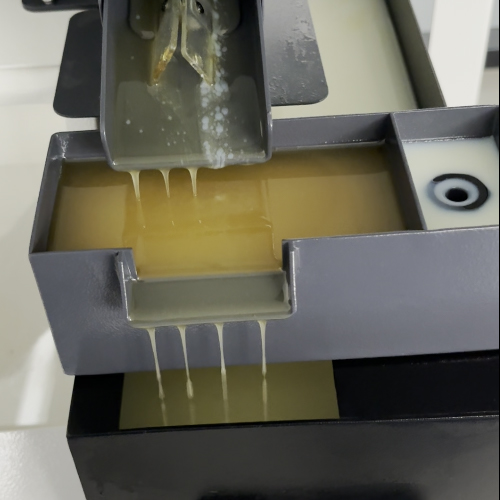
While laboratory conditions cannot fully replicate every industrial environment, the test demonstrated the ability of the disc skimmer to continuously recover surface oil throughout operation.
Potential Applications
Based on our testing and field observations, disc oil skimmers may be suitable for applications such as:
- CNC machine coolant tanks
- Metalworking fluid systems
- Parts washing equipment
- Industrial wastewater treatment systems
- Oil-water separation processes
The most suitable solution will always depend on factors such as oil type, contamination level, tank design, and operating conditions.
Continuing Evaluation
Laboratory testing is only one step in evaluating equipment performance. Real-world operating conditions often introduce additional variables that cannot be fully reproduced in a controlled environment.
As we continue testing the YSF3-25150 in different applications, we look forward to gathering more data and feedback from users in the field.
For now, we simply wanted to share a recent test and some initial observations regarding disc oil skimmer performance in coolant management applications.