-
WhatsAPP: +86 18706448138
-
Tengzhou, Shandong, China

Innovative Electrical Solutions for CNC Machines
Innovative Electrical Solutions for CNC Machines

How Mechanical Endurance Testing Ensures the Reliability of Safety Door Switches
In industrial equipment, safety components are expected to perform reliably every time they are used.
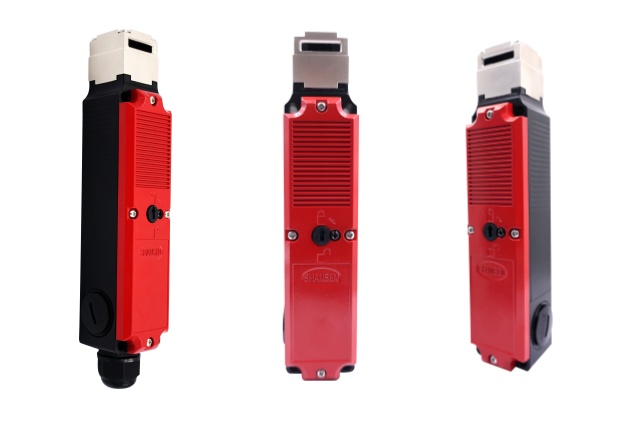
A safety door switch may appear to be a small component installed on a machine guard, but its role is critical. It monitors the position of the safety door and helps prevent machine operation when access to hazardous areas is possible.
Unlike many machine components that operate continuously under a fixed condition, safety door switches experience repeated mechanical actions throughout their service life. Every time an operator opens and closes a machine door, the actuator engages and releases from the switch.
Over years of operation, these repeated cycles can place continuous stress on the mechanical structure.
That is why mechanical endurance testing is an essential part of safety door switch quality verification.
Why Mechanical Durability Matters for Safety Door Switches
In CNC machines and industrial automation equipment, machine doors may be opened and closed thousands of times during daily operation.
Each operation involves:
- Actuator insertion into the switch
- Mechanical engagement between components
- Signal activation
- Actuator release when the door opens
Over a long service period, insufficient mechanical durability may result in:
- Unstable actuator engagement
- Mechanical wear
- Reduced switching consistency
- Increased maintenance requirements
For machine builders, a safety component failure can affect not only productivity but also operator protection.
Therefore, safety door switches must maintain stable mechanical performance throughout the expected lifetime of the equipment.
Simulating Real Machine Operation Through Endurance Testing
To verify mechanical reliability, we perform continuous endurance testing using automated test equipment.
The test system repeatedly simulates the opening and closing process of a machine safety door by inserting and removing the actuator from the safety door switch.
This allows us to evaluate the durability of key mechanical structures under repeated operation.
During long-term testing, we monitor whether the safety switch maintains:
- Consistent actuator engagement
- Stable mechanical movement
- Reliable switching performance
- Structural integrity after repeated cycles
This type of verification helps identify potential issues during product development and supports stable quality during mass production.
Ensuring Consistent Quality in Long-Term Production
Mechanical life is not only a specification defined during product design. It is also a capability that needs to be maintained throughout continuous production.
For our safety door switches, the mechanical life requirement is more than 1,000,000 operating cycles.
Regular endurance verification helps ensure that products manufactured over time continue to meet the same reliability standards.
By combining product design, manufacturing control, and durability testing, we aim to provide safety components that customers can confidently integrate into CNC machines and industrial automation systems.
Reliability Comes From Continuous Verification
In machine safety applications, a component must work reliably not only when it is new, but also after years of repeated operation.
Mechanical endurance testing provides valuable evidence of product reliability and helps ensure that safety door switches can continue performing their intended function throughout the machine lifecycle.
Because reliability is not only written in specifications.
It is built through testing, verification, and continuous improvement.
Looking for Reliable Safety Door Switch Solutions?
We provide safety door switches and industrial automation components for CNC machines and manufacturing equipment.
Contact us for product specifications, samples, and OEM/ODM cooperation.