-
WhatsAPP: +86 18706448138
-
Tengzhou, Shandong, China

Innovative Electrical Solutions for CNC Machines
Innovative Electrical Solutions for CNC Machines

How to Choose a CNC Machine Tool Accessories Manufacturer for OEM Projects
Selecting a supplier for CNC machine tool accessories is not simply a matter of finding the lowest unit price.
For machine tool manufacturers and industrial equipment companies, components such as CNC operation panels, MPG handwheels, safety switches, LED work lights, cable assemblies, warning lights, and oil mist collectors need to work together as part of the complete machine.
This becomes even more important for OEM projects. A component may need to meet specific dimensions, electrical requirements, connector configurations, cable lengths, labeling, appearance, and installation conditions.
Therefore, when looking for a CNC machine tool accessories manufacturer, it is useful to evaluate the supplier from several different aspects.
What Should a CNC Machine Tool Accessories Supplier Provide?
A suitable supplier should be able to provide more than a product catalog.
Depending on the project, machine builders may need:
- Standard CNC machine accessories
- Replacement components
- Customized machine operation panels
- MPG handwheels and manual pulse generators
- Safety door switches
- LED machine tool lights
- Cable assemblies
- Warning and signal lights
- Oil mist collectors
- Oil skimmers
- Electrical modules
- OEM and ODM production
The more components involved in a project, the more important it becomes for the supplier to understand how these products are used on the machine.
1. Check the Supplier’s Product Range
The first factor is the supplier’s actual product range.
A supplier specializing in only one type of component may be suitable for a simple replacement order. However, OEM machine builders often need several different accessories for the same machine.
For example, one CNC lathe may require:
Operation Panel → MPG Handwheel → Safety Door Switch → LED Work Light → Warning Light → Cable Assembly
If these components can be sourced from one manufacturer, communication and coordination can be simpler.
A broad product range can also make it easier to standardize components across different machine models.
2. Check OEM and ODM Capability
Standard products do not always meet the requirements of a machine manufacturer.
An OEM customer may require a product with a specific:
- Size
- Mounting hole pattern
- Connector
- Cable length
- Switch arrangement
- Label
- Logo
- Housing
- Electrical configuration
For example, a standard CNC operation panel may need to be modified to match an existing machine control cabinet.
An MPG handwheel may require a different connector and cable length.
A machine tool LED light may need to fit an existing mounting position without changing the machine structure.
These are typical OEM requirements.
A supplier capable of modifying the product itself can often provide a more practical solution than simply selecting the closest standard model.
3. Manufacturing Capability Matters
When evaluating a CNC machine accessory manufacturer, it is useful to understand what the supplier actually manufactures in-house.
Product quality is affected by many processes, including:
- Product design
- Mold and tooling development
- Sheet metal fabrication
- CNC machining
- Electrical assembly
- PCB and electronic assembly
- Cable assembly
- Surface treatment
- Painting
- Final assembly
- Testing
If most of these processes are outsourced, communication between different suppliers can make customized projects more complicated.
A manufacturer with more production processes under its own control can coordinate design changes and production more efficiently.
4. Electrical Compatibility Is Critical
CNC accessories are not purely mechanical products.
For electrical components, compatibility must be confirmed before production.
For a CNC MPG handwheel, for example, important parameters may include:
- Number of axes
- Pulse output
- Resolution
- Supply voltage
- Signal type
- Axis selection
- Feed-rate multiplier
- Emergency stop
- Enable switch
- Connector
- Cable length
For a CNC operation panel, the electrical configuration may involve switches, push buttons, indicator lamps, emergency stop circuits, connectors, and controller interfaces.
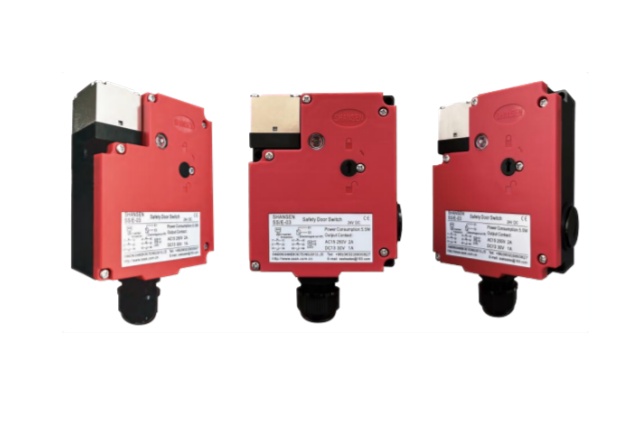
For a safety door switch, contact configuration and connection details are particularly important because the switch may be integrated into the machine’s safety circuit.
Therefore, a reliable supplier should be able to discuss the technical parameters rather than simply match the product by appearance.
5. Mechanical Compatibility Is Equally Important
Electrical compatibility alone is not enough.
A replacement or customized CNC accessory must also physically fit the machine.
Before ordering, machine builders should confirm:
- Overall dimensions
- Mounting dimensions
- Panel cutout
- Installation depth
- Connector position
- Cable outlet
- Mounting holes
- Operating clearance
This is especially important for operation panels and pendant stations.
A panel that has the correct electrical functions but does not fit the existing machine structure is not a practical replacement.
6. Ask About Samples Before Mass Production
For customized OEM products, samples are an important part of the development process.
A typical process may include:
Requirement → Technical Discussion → Drawing → Sample → Testing → Modification → Approval → Mass Production
This process allows the customer to verify the product before committing to a large production quantity.
For example, a machine manufacturer may test:
- Panel dimensions
- Switch operation
- MPG signals
- Emergency stop function
- LED illumination
- Connector compatibility
- Cable routing
- Installation
- Environmental performance
A supplier willing to support sample development can reduce the risk of problems during mass production.
7. Product Testing Should Match the Application
Different machine tool accessories require different testing methods.
For electrical products, testing may include electrical continuity, signal output, insulation, function, and assembly inspection.
For mechanical components, dimensional and mechanical checks may be required.
For machine tool lights, testing may focus on illumination, voltage, temperature, sealing, and continuous operation.
For safety-related components, the electrical configuration and mechanical operation need to be verified according to the intended application.
The important point is that testing should be related to the actual function of the component rather than relying only on a generic factory inspection.
8. Consider Cable and Connector Customization
Cable assemblies are often overlooked when selecting CNC machine accessories.
However, incorrect cable length or connector configuration can create unnecessary installation work.
For OEM projects, cable assemblies can be customized according to:
- Cable length
- Number of wires
- Connector type
- Pin assignment
- Terminal type
- Protective sleeve
- Labels
- Routing requirements
For machine manufacturers producing multiple machines, pre-assembled cables can also help reduce wiring time during final assembly.
9. Replacement Parts and OEM Parts Are Different Requirements
A replacement project and an OEM project usually require different approaches.
Replacement Parts
For replacement applications, the priority is usually compatibility.
The customer may provide:
- Original model number
- Product photographs
- Dimensions
- Connector information
- Electrical specifications
- Existing machine model
The supplier then needs to identify whether a standard replacement or compatible alternative is available.
OEM Parts
For OEM projects, the customer may instead provide:
- Drawings
- Technical specifications
- Sample products
- Electrical diagrams
- Machine installation requirements
- Annual consumption
- Target cost
The supplier then needs to develop or modify the product according to the application.
Understanding this difference can make communication much more efficient.
10. Look for a Manufacturer Rather Than Only a Trading Company
Price is an important consideration, but the supply chain behind the price is also important.
When a supplier is a manufacturer, customers can communicate directly about:
- Product specifications
- Engineering changes
- Production schedules
- Quality requirements
- Packaging
- Samples
- Customization
- Long-term supply
This can be particularly valuable for OEM customers because technical requirements may change during product development.
A direct manufacturer can also provide more information about the production process and quality control.
11. What Information Should You Send When Requesting a Quote?
A detailed RFQ helps the supplier provide an accurate quotation.
For CNC machine tool accessories, customers should provide as much of the following information as possible:
Product Information
- Product name
- Existing model number
- Application
- Required quantity
Technical Information
- Dimensions
- Voltage
- Current
- Signal type
- Connector
- Cable length
- Contact configuration
- Mounting requirements
OEM Information
- Drawings
- Photos
- Samples
- Logo requirements
- Label requirements
- Packaging requirements
Commercial Information
- Estimated annual quantity
- Initial order quantity
- Required delivery time
- Destination country
- Shipping requirements
For customized products, photographs and drawings can significantly reduce the time required to identify the correct solution.
12. Why One Manufacturer for Multiple Components Can Be Useful
For a complete CNC machine, many small components need to work together.
Sourcing every component from a different supplier can create several additional tasks:
- Multiple quotations
- Multiple samples
- Multiple technical discussions
- Different quality standards
- Different delivery schedules
- More incoming inspection
- More supplier management
A manufacturer offering multiple CNC machine tool accessories can provide an alternative sourcing model.
Instead of managing several suppliers, a machine builder may be able to consolidate several components through one manufacturing partner.
This does not mean that every component must come from the same supplier. Rather, it gives the machine builder another option when reducing sourcing complexity is important.
CNC Machine Tool Accessories for OEM and ODM Applications
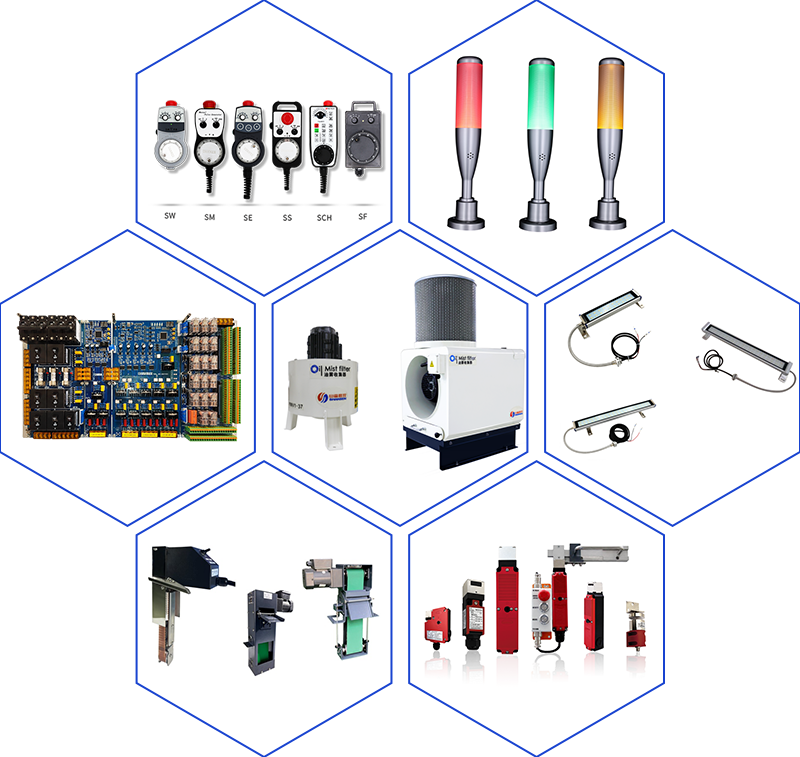
Shansen CNC manufactures a range of components for CNC machine tools and industrial equipment.
Our product range includes:
- Machine operation panels
- CNC MPG handwheels
- Manual pulse generators
- Safety door switches
- LED machine tool work lights
- Warning lights
- Cable assemblies
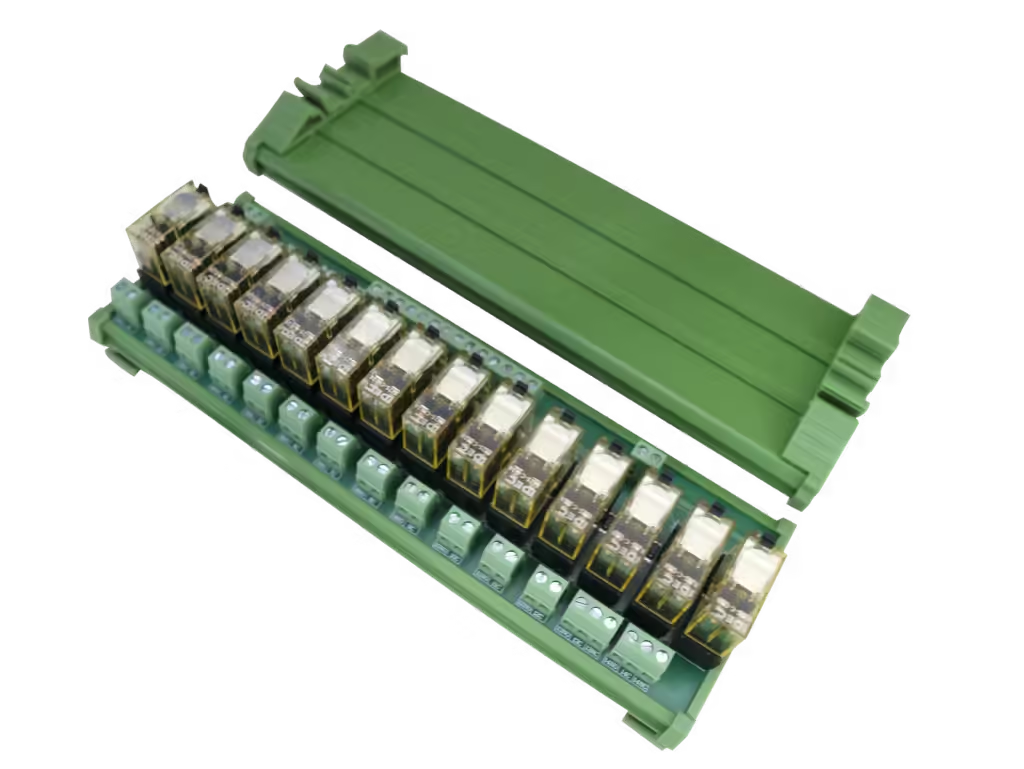
- Relay modules
- Intelligent switchboards
- Oil mist collectors
- Oil skimmers
- Broken tool detection components
In addition to standard products, we support OEM and ODM projects involving customized dimensions, electrical configurations, connectors, cables, labels, and other requirements.
Our manufacturing system covers multiple processes including product development, mold and tooling, sheet metal fabrication, machining, electrical assembly, cable assembly, painting, and final assembly.
This allows us to support projects from individual components to multiple accessory packages for machine tool manufacturers.
Conclusion
Choosing a CNC machine tool accessories manufacturer requires more than comparing product prices.
For OEM and long-term supply projects, machine builders should consider:
Product range + Technical capability + Manufacturing capability + Customization + Testing + Supply stability
The right supplier should be able to understand how an individual component fits into the complete machine.
Whether the requirement is a CNC operation panel, MPG handwheel, safety switch, LED work light, cable assembly, oil mist collector, or another machine tool accessory, clear technical communication and reliable manufacturing are essential for a successful project.
For machine tool manufacturers and industrial equipment companies looking for CNC machine accessories, OEM components, or customized machine tool electrical products, working directly with an experienced manufacturer can provide a more efficient path from initial requirement to mass production.