-
WhatsAPP: +86 18706448138
-
Tengzhou, Shandong, China

Innovative Electrical Solutions for CNC Machines
Innovative Electrical Solutions for CNC Machines

Why Is Tramp Oil Returning So Quickly After Coolant Replacement?
Why Is Tramp Oil Returning So Quickly After Coolant Replacement?
Tramp oil often reappears shortly after coolant replacement in CNC machining systems. Learn the causes, impacts, and how continuous oil removal can help extend coolant life and improve machine performance.
Many machine shops have experienced the same frustrating situation:
The coolant has just been replaced, the tank is cleaned, and everything looks normal. Yet only a few weeks later, an oily film begins to appear on the coolant surface again. Unpleasant odors develop, machine interiors become dirty, and coolant performance gradually declines.
When this happens, the coolant itself is often blamed. In reality, the root cause is frequently something else: continuous tramp oil contamination.
Where Does Tramp Oil Come From?
In CNC machining environments, small amounts of oil are constantly introduced into coolant systems during normal operation. Common sources include:
- Hydraulic oil seepage
- Way lubricant overflow
- Spindle lubrication systems
- Grease and machine maintenance residues
Although each source may contribute only a small amount of oil, the contamination accumulates over time. Since these oils are generally lighter than water-based coolants, they rise to the surface and form a floating oil layer.
Without regular removal, the problem continues regardless of how recently the coolant was replaced.
Why Is Floating Oil a Problem?
A thin oil layer on the coolant surface may seem harmless at first, but it can create several operational issues.
Reduced Coolant Performance
Floating oil interferes with heat dissipation and coolant circulation, reducing the effectiveness of cooling and lubrication during machining.
Shortened Coolant Life
Contaminated coolant deteriorates more quickly, requiring more frequent replacement and increasing operating costs.
Odor and Bacterial Growth
The oil layer limits oxygen exchange at the coolant surface, creating conditions that encourage anaerobic bacteria. This often leads to unpleasant odors and degraded coolant quality.
Increased Machine Cleaning Requirements
As oil accumulates inside the machine enclosure, maintenance personnel spend more time cleaning machine surfaces, guarding, and coolant tanks.
Why Coolant Replacement Alone Doesn’t Solve the Problem
Replacing coolant removes the symptoms temporarily, but it does not eliminate the source of contamination.
As long as lubricating oils continue entering the system, a new floating oil layer will begin forming almost immediately after fresh coolant is added.
This is why some workshops find themselves replacing coolant repeatedly without achieving lasting improvement.
A more effective approach is to continuously remove tramp oil before it accumulates.
Continuous Oil Removal for Cleaner Coolant
Oil skimmers are widely used in machining operations to separate floating oil from coolant systems.
By continuously collecting surface oil, they help:
- Maintain cleaner coolant
- Extend coolant service life
- Reduce odor issues
- Improve machine cleanliness
- Lower coolant replacement frequency
Unlike chemical treatments or disposable absorbents, oil skimmers provide a simple physical separation method that can operate continuously with minimal intervention.
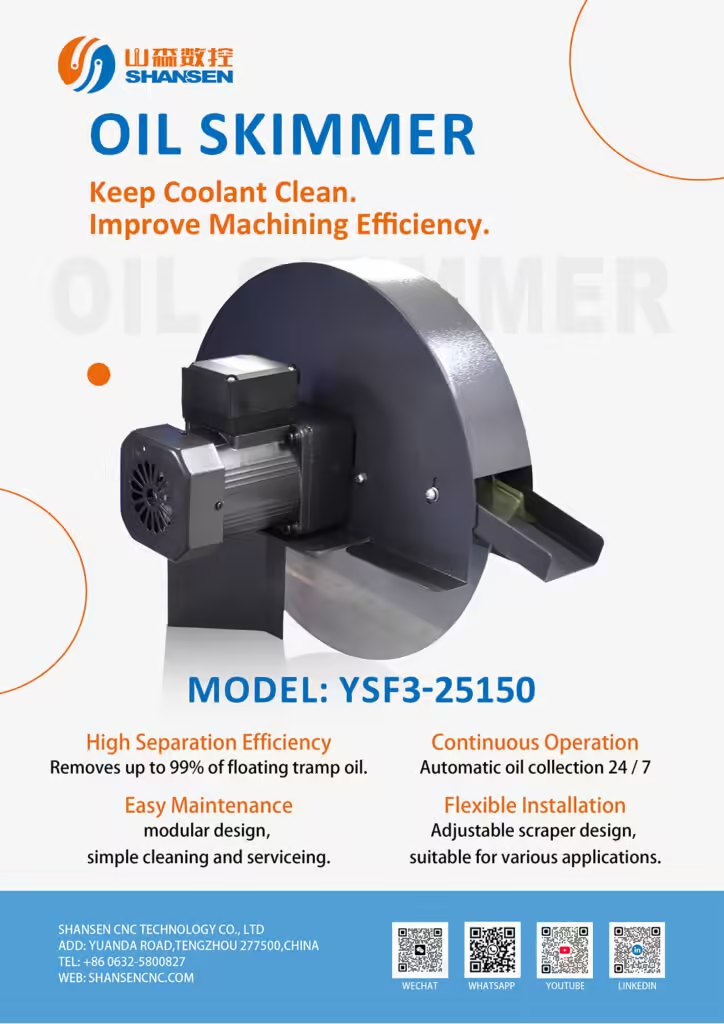
A Practical Solution: YSF3 Disc Oil Skimmer
The YSF3 Disc Oil Skimmer is designed for continuous removal of floating tramp oil from coolant tanks and industrial fluid systems.
Key features include:
- Up to 99% oil removal efficiency
- Continuous 24/7 operation
- Compact installation footprint
- Adjustable scraper design
- Easy maintenance and cleaning
Its rotating disc selectively collects floating oil from the coolant surface and transfers it to a collection channel, allowing contaminated oil to be removed without interrupting production.
For machine shops seeking a practical way to improve coolant management, continuous oil removal can often deliver greater long-term benefits than simply replacing coolant more frequently.
Conclusion
If tramp oil keeps returning shortly after coolant replacement, the issue may not be the coolant itself.
In many cases, the real challenge is the ongoing introduction of lubricating oils into the system. By addressing contamination at its source and removing floating oil continuously, manufacturers can improve coolant performance, reduce maintenance requirements, and extend the service life of their machining fluids.
As coolant management costs continue to rise, preventive solutions such as disc oil skimmers are becoming an increasingly important part of efficient shop floor operations.