-
WhatsAPP: +86 18706448138
-
Tengzhou, Shandong, China

Innovative Electrical Solutions for CNC Machines
Innovative Electrical Solutions for CNC Machines

Why Does Oil Mist Build Up Around CNC Machines? Causes, Risks, and Effective Solutions
In CNC machining, oil mist is often considered an unavoidable byproduct. However, when oil mist begins to accumulate throughout the workshop, it can affect far more than visibility. Machine surfaces become slippery, electrical cabinets collect oily residue, maintenance intervals become shorter, and operators are exposed to a less comfortable working environment.
Understanding why oil mist forms—and how to control it at the source—is the first step toward maintaining a cleaner and more efficient workshop.
What Causes Oil Mist During CNC Machining?
Oil mist is generated whenever cutting fluid or lubricating oil is subjected to high-speed rotation, pressure, or heat.
Several common machining operations contribute to oil mist formation, including:
- High-speed turning
- Milling
- Drilling
- Grinding
- High-pressure coolant systems
As the spindle rotates at high speed, coolant is atomized into microscopic droplets. These droplets remain suspended in the air before eventually settling on surrounding equipment, walls, floors, and electrical components.
Regular cleaning can remove the residue, but it cannot stop new oil mist from being produced.
Why Is Oil Mist a Problem?
Ignoring oil mist can gradually lead to several operational issues.
1. Increased Machine Maintenance
Oil deposits accumulate on machine covers, guideways, and surrounding equipment, requiring more frequent cleaning and maintenance.
2. Poor Workshop Environment
Suspended oil mist reduces air quality and creates an uncomfortable working environment, especially in enclosed workshops.
3. Slippery Floors
Oil droplets eventually settle on the floor, increasing the risk of slips and making housekeeping more difficult.
4. Contamination of Electrical Components
Over time, oil residue may accumulate inside electrical cabinets, cooling fans, or ventilation systems, affecting equipment reliability and increasing maintenance costs.
Why Cleaning Alone Isn’t Enough
Many workshops rely on regular cleaning schedules to control oil contamination.
While cleaning removes existing residue, it does not address the root cause. As long as machining continues, new oil mist is continuously generated.
A more effective strategy is to capture oil mist directly at the source before it spreads throughout the workshop.
How a Multi-Stage Oil Mist Collector Helps
A dedicated oil mist collector removes airborne oil droplets before they settle on machines and surrounding equipment.
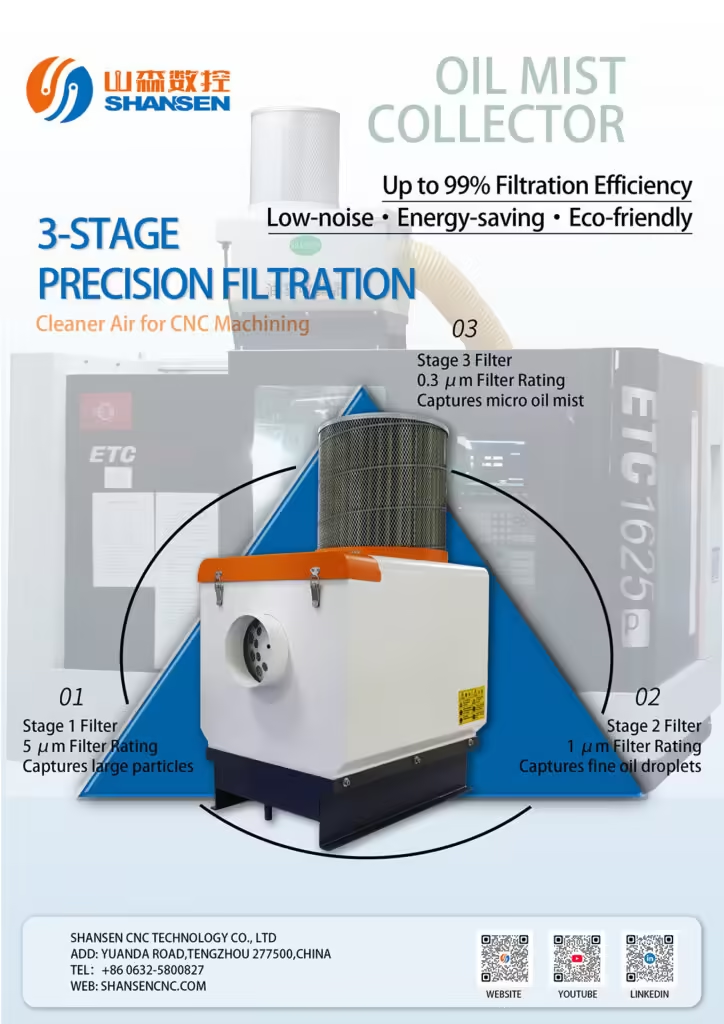
Shansen CNC’s oil mist collector adopts a 3-stage filtration system designed for CNC machining applications.
- Stage 1: 5 μm filter rating for capturing larger oil droplets and particles.
- Stage 2: 1 μm filter rating for removing finer oil mist.
- Stage 3: 0.3 μm filter rating for capturing microscopic oil mist particles.
This multi-stage design provides up to 99% filtration efficiency, helping maintain cleaner air while reducing oil accumulation throughout the workshop.
In addition, the system features:
- Low-noise operation
- Energy-efficient performance
- Compact installation
- Easy filter maintenance
Suitable Applications
Oil mist collectors are commonly installed on:
- CNC Lathes
- Vertical Machining Centers
- Horizontal Machining Centers
- Milling Machines
- Grinding Machines
- Other metalworking equipment using coolant or lubricating oil
Final Thoughts
Oil mist is a normal part of many machining processes, but excessive oil mist should not be accepted as unavoidable.
By understanding how oil mist is generated and capturing it before it spreads, manufacturers can improve workshop cleanliness, reduce maintenance requirements, and create a more efficient production environment.
If you’re looking for an oil mist collection solution for your CNC machines, Shansen CNC offers reliable systems designed for a wide range of machining applications.