-
WhatsAPP: +86 18706448138
-
Tengzhou, Shandong, China

Innovative Electrical Solutions for CNC Machines
Innovative Electrical Solutions for CNC Machines

Everything You Need to Know About CNC Manual Pulse Generators
Learn how CNC manual pulse generators enhance machining accuracy, efficiency, and control. Tips on installation, maintenance, and choosing the right device.
As a manufacturer of high-quality manual pulse handwheels, we understand the critical role these devices play in modern machining operations. A CNC handwheel provides precise control over machine tool movements, making it essential for achieving high accuracy and efficiency in both milling and turning applications. This guide will help you understand the features, applications, installation, and maintenance of these devices, ensuring you maximize your CNC system’s performance.
Table of Contents
What is a CNC Manual Pulse Generator?
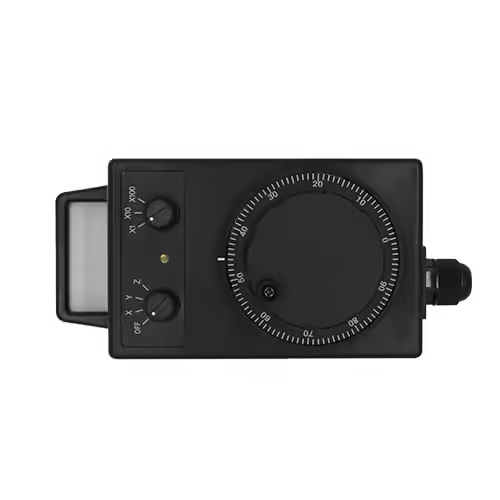
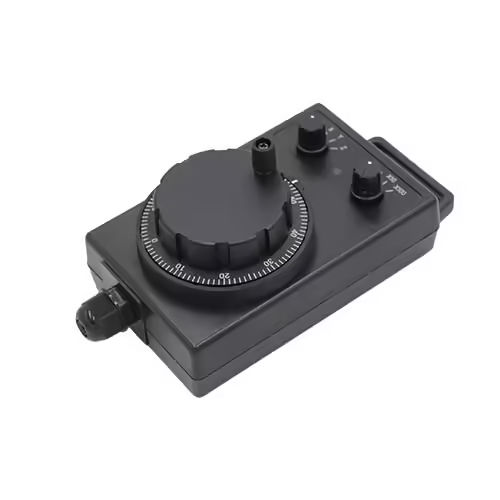
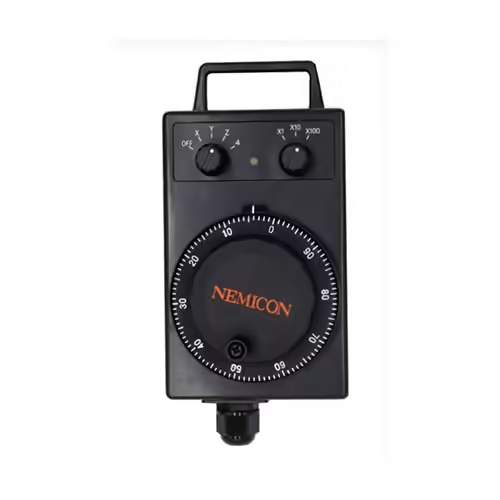
A manual pulse handwheel (MPG) allows operators to manually control the movement of a CNC machine’s axes. Unlike traditional electronic jog wheels, it sends incremental signals to the machine controller, enabling fine positioning of the tool. These devices are widely used in metalworking, precision machining, and automated production setups where repeatability and accuracy are critical.
Key points:
- Precise rotational control for machining operations
- Multi-axis compatibility for X, Y, Z, and additional axes
- Adjustable step resolution for various tasks
Related terms: precision pulse controller, CNC handwheel, machining control device
How These Devices Work
MPGs operate by sending electrical pulses to the CNC system each time the wheel rotates. Each pulse corresponds to a precise movement of the machine’s axis, giving operators tactile and controlled adjustment. Depending on the design, they may use incremental encoders or analog signals. Proper integration ensures smooth, accurate operation.
Key features:
- Incremental or analog signal output
- Integration with CNC controllers for multiple axes
- Adjustable resolution for coarse or fine movements
Related keywords: encoder signal, axis control, manual encoder device
Key Features
Modern manual pulse handwheels offer several advantages designed to improve machining performance:
| Feature | Description |
|---|---|
| Precision Control | Micrometer-level adjustments for high-accuracy operations |
| Multi-axis Support | Works with single or multiple axes, including X, Y, Z |
| Adjustable Step Resolution | Choose increments for fine or rapid movement |
| Durable Build | Industrial-grade construction for long-term reliability |
| Ergonomic Interface | Comfortable and easy-to-use for repetitive tasks |
Related terms: rotary handwheel, precision control device, step resolution
Benefits of Using a Manual Pulse Handwheel
Using an MPG offers several benefits over traditional manual methods or jog wheels:
- Enhanced Accuracy – Precise incremental control reduces machining errors.
- Operational Efficiency – Faster tool positioning saves time and boosts productivity.
- Reduced Wear – Controlled movement minimizes stress on machine components.
- Improved Operator Feedback – Provides tactile control for delicate adjustments.
Related keywords: high-precision CNC control, improved machining performance, tool longevity
Installation Guide
Proper installation ensures safety and optimal performance:
- Preparation – Disconnect power and ensure a clean workspace.
- Mounting the Device – Secure the handwheel with the recommended brackets and screws.
- Connecting to Controller – Follow wiring diagrams to attach the incremental outputs correctly.
- Calibration – Rotate the wheel and verify the CNC system responds accurately.
- Safety Check – Ensure wiring is secure and there are no mechanical obstructions.
Related terms: installation guide, wiring instructions, CNC setup
Maintenance Tips
Regular maintenance keeps the MPG functioning reliably:
- Keep the device clean and free of dust
- Avoid moisture or corrosive environments
- Inspect connections and wiring periodically
- Troubleshoot inconsistent pulse signals promptly
Related keywords: device maintenance, troubleshooting guide, long-term performance
Choosing the Right Device
Selecting the right manual pulse handwheel depends on your CNC operations:
- Precision Needs – Higher-resolution encoders for fine adjustments
- Axis Compatibility – Single or multi-axis models depending on your machine
- Brand Reliability – Our MPGs are tested for durability and performance
- Application Type – Suitable for lathes, milling machines, or automation setups
Related keywords: high-accuracy MPG, CNC compatibility, best handwheel for milling
MPG vs Jog Wheel
| Feature | Manual Pulse Handwheel | Jog Wheel |
|---|---|---|
| Control | Incremental signals for precise movement | Continuous rotation for rough positioning |
| Accuracy | Micrometer-level adjustments | Less precise, ideal for general movement |
| Application | High-precision CNC tasks | Basic manual positioning |
| Cost | Higher due to precision and build | Lower, simpler design |
Related keywords: jog wheel comparison, manual control device, pulse handwheel advantages
Common Applications
Manual pulse handwheels are widely used in:
- Metal cutting machines like lathes and milling centers
- Precision machining centers for small components
- Automated production lines for controlled manual adjustments
- Research or prototyping environments requiring high accuracy
Related keywords: industrial CNC, precision machining, manual axis control
Conclusion
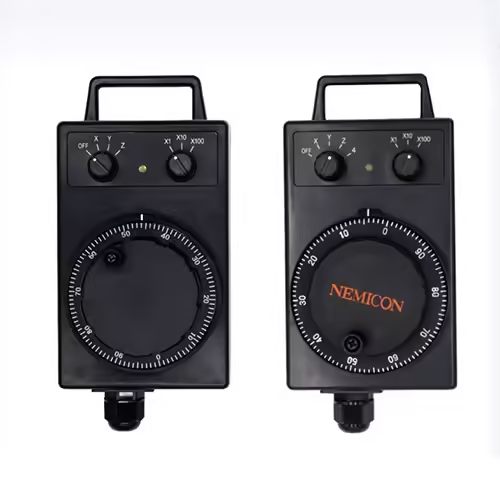
Manual pulse handwheels are essential tools for modern CNC operations, offering precise control, efficiency, and durability. Choosing a high-quality, reliable device ensures accurate machining and long-lasting performance. By understanding their features, applications, and maintenance, you can fully leverage your CNC system and achieve superior results.
As a manufacturer, we provide tested, precision-engineered MPGs suitable for a wide range of CNC machines. Contact us to explore our products and find the perfect solution for your machining needs.
FAQ: CNC Manual Pulse Generator
1. What is a CNC Manual Pulse Generator?
A CNC Manual Pulse Generator (MPG) is a handwheel device that allows precise manual control of a CNC machine’s axes for accurate positioning.
2. How does a CNC Manual Pulse Generator work?
It sends incremental electrical pulses to the CNC controller, enabling controlled, fine-tuned movements of the machine tool.
3. What are the benefits of using a CNC Manual Pulse Generator?
MPGs improve machining precision, increase operational efficiency, reduce tool wear, and give operators better control.
4. Can I install a CNC Manual Pulse Generator on any CNC machine?
Most CNC machines support MPGs, but it’s important to check compatibility with your specific controller and the number of axes.
5. How do I maintain a CNC Manual Pulse Generator?
Regular maintenance includes keeping it clean, avoiding moisture and dust, checking wiring connections, and troubleshooting any inconsistent pulse signals.